
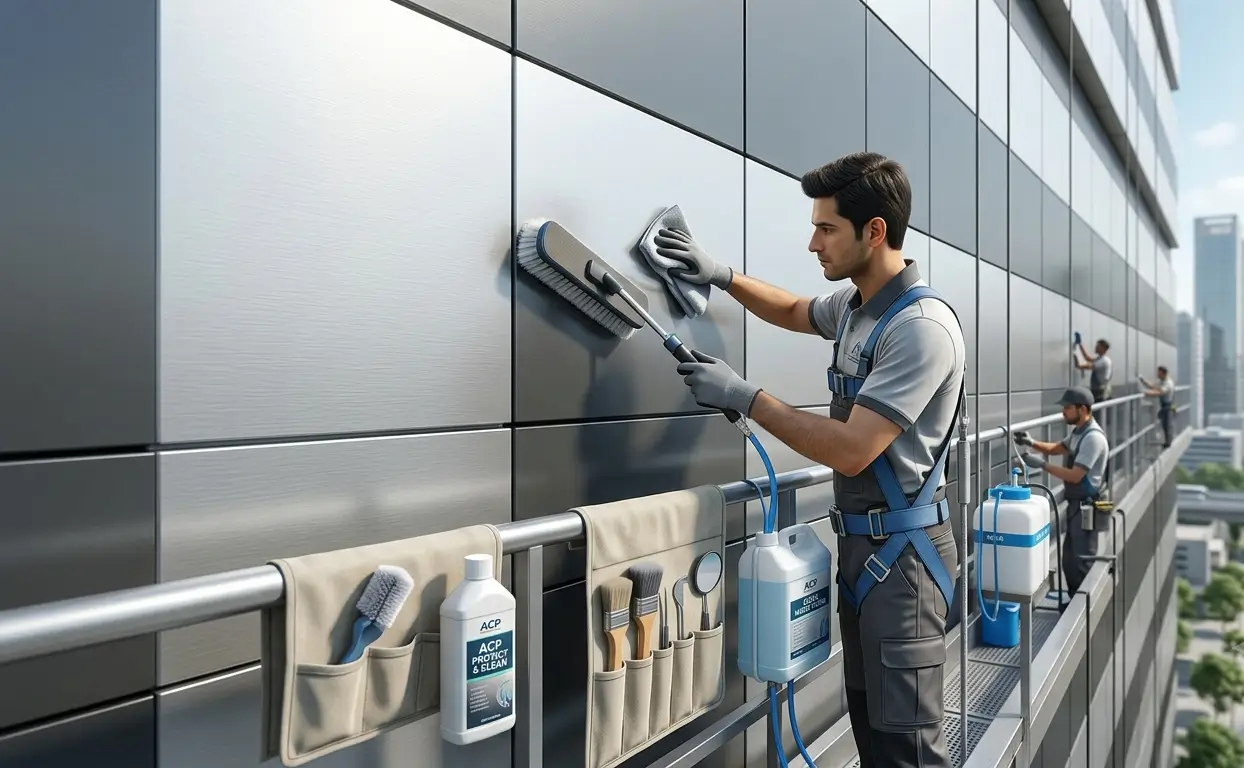
Aluminium composite panels have become a popular choice for modern buildings in India. You can see them on office buildings, shopping centres, hospitals, showrooms, and residential properties. These panels give buildings a clean and modern look. They also offer a smooth surface and come in different colours and finishes.
However, installing aluminium composite panels is only the first step. You also need to maintain them properly. Dust, pollution, rain, strong sunlight, and bird droppings can affect their appearance over time. Poor maintenance can also hide small problems that may become expensive to repair. The good news is that aluminium composite panel cladding does not need complicated daily care. A regular cleaning routine and timely inspection can help keep it in good condition for years.
What Is Aluminium Composite Panel Cladding?
Aluminium composite panel cladding, also called ACP cladding, is a building material used to cover the outside or inside surfaces of buildings. An Aluminium Composite Panel sheet usually has two thin aluminium layers with a core material between them. Manufacturers join these layers to create a lightweight and flat panel.
Builders use Aluminium Composite Panels for several purposes, such as:
- Exterior building walls
- Commercial building facades
- Office entrances
- Shop fronts and showrooms
- Interior wall decoration
- Signboards and display areas
People choose ACP cladding because it offers a modern appearance and comes in different colours and finishes. However, its durability depends on the panel quality, installation method, weather conditions, and maintenance.
Why Does Aluminium Composite Panel Cladding Need Maintenance?
Many people assume that aluminium panels do not require maintenance because aluminium does not rust like ordinary iron. However, Aluminium Composite Panel cladding still needs regular care. Dust and pollution can slowly collect on the surface. Rainwater may leave marks, especially in areas with heavy traffic pollution. Bird droppings and other stains can also affect the panel finish.
Regular maintenance helps you:
- Keep the building exterior clean and attractive.
- Remove dirt before it becomes difficult to clean.
- Identify loose panels and damaged joints.
- Notice scratches or coating problems early.
- Reduce the chances of expensive repairs.
- Maintain the overall appearance of the building.
A little attention at the right time can prevent bigger problems later.
8 Practical Maintenance Tips for Aluminium Composite Panels
1. Clean the Panels Regularly
One of the most straightforward methods for maintaining Aluminium Composite Panel cladding is to clean it on a regular basis. Dust and pollution can settle on the panels, especially in busy cities and industrial areas. For most buildings, you can plan a cleaning schedule based on the local environment. Buildings near busy roads or construction sites may need more frequent cleaning than buildings in less polluted areas.
When you want to remove loose dirt, you should use clean water and a soft cloth or sponge. You can use a solution of mild soap to clean and disinfect surfaces in a regular manner. Wipe the surface with a gentle motion, and then rinse it with clean water.
2. Use Safe Cleaning Materials
The cleaning solution you select is important. An aluminium composite panel’s protective covering may be harmed by a harsh scrubber or potent chemical. Use a microfibre cloth, a soft sponge, or an appropriate non-abrasive cleaning solution. These substances aid in dirt removal without causing surface scratches.
Avoid the following:
- Steel wool and rough scrubbers
- Strong acids and alkalis
- Harsh chemical cleaners
- Strong solvents unless the panel manufacturer approves them
- Sharp tools that can scratch the surface
Before utilising a new product, always refer to the cleaning instructions provided by the manufacturer. Try a cleaning solution on a small, inconspicuous area first if you’re not confident about it.
3. Inspect Panels for Scratches and Damage
Small scratches may not look serious at first. However, you should not ignore visible damage to the panel surface. Inspect the cladding from a safe location and look for dents, cracks, peeling paint, and unusual colour changes. Pay attention to corners and areas around doors and windows because these locations can experience regular contact or impact.
If you notice a damaged panel, ask a qualified cladding professional to inspect it. Do not try to repair deep scratches or damaged coating with ordinary paint. The wrong repair material may affect the panel’s finish.
4. Check Joints and Sealants
Joints and sealants help protect the gaps between ACP panels and nearby building elements. They also play an important role in managing water entry. Over time, weather conditions and building movement may affect sealants. You may notice cracks, gaps, or sections where the sealant has started to come away.
Regularly check these areas. Get in touch with an expert to determine the appropriate substitute material if you discover damaged sealant. Make sure the sealant is appropriate for the panel system before applying any random sealer over the previous material. Proper joint maintenance can help reduce water leakage and protect the building structure behind the cladding.
5. Remove Bird Droppings and Stubborn Stains Carefully
Bird droppings can leave marks on Aluminium Composite Panels. If you allow them to remain for a long time, they may become harder to remove. Soak the affected area with clean water to soften the dirt. Then gently wipe it with a soft cloth or sponge. If the stain cannot be removed with ordinary water, use a moderate cleaning solution.
Never scrape dried stains with a knife, blade, or metal object. These tools can scratch the panel surface. For oil, paint, or other difficult stains, follow the panel manufacturer’s cleaning instructions. Some cleaning chemicals may damage the coating even if they remove the stain.
6. Check the Panels After Heavy Rain and Storms
Indian buildings face different weather conditions throughout the year. Heavy rain, strong winds, and storms can affect exterior cladding. After severe weather, inspect the building from a safe position. Look for loose panels, visible gaps, water stains, and damaged edges. Also check whether any nearby objects have hit the cladding.
If you notice a panel moving, hanging loose, or making unusual sounds, arrange a professional inspection immediately. Do not approach or touch an unstable panel. Never climb onto an unsafe surface to inspect exterior cladding. High-rise buildings need trained workers and suitable safety equipment for inspection and cleaning.
7. Protect Panels During Nearby Construction Work
Construction, renovation, and painting work can create dust and debris. Workers may also accidentally hit the panels while moving ladders, tools, or building materials. If you plan renovation work near ACP cladding, protect the panels with suitable covering. Make sure the covering does not scratch the surface or trap moisture for long periods.
Ask workers to avoid placing heavy objects against the panels. They should also keep cement, paint, and other construction materials away from the cladding. After the work finishes, remove the protective covering carefully and clean the surface using approved methods.
8. Follow the Manufacturer’s Maintenance Instructions
Not all aluminium composite panels have the same surface finish or core material. Different products may also have different cleaning requirements. Read the product maintenance guide before starting a cleaning routine. It may explain which cleaning products you can use and which materials you should avoid.
Keep the product details and warranty documents in a safe place. These records can help you contact the manufacturer or supplier if you face a problem.
Mistakes to Avoid While Maintaining ACP Cladding
Even simple maintenance can cause damage if you use the wrong method. Avoid these common mistakes:
| Common mistake | Why you should avoid it |
| Using rough scrubbers | They can scratch the panel finish. |
| Applying strong chemicals | They may damage the protective coating. |
| Ignoring loose panels | Loose panels may create safety risks. |
| Delaying sealant repairs | Damaged joints may allow water entry. |
| Using sharp tools | They can leave permanent surface marks. |
| Ignoring manufacturer guidance | The wrong cleaning method may affect the product warranty. |
Never assume that every stain needs a strong chemical cleaner. Start with clean water and a soft cloth. If the stain remains, check the manufacturer’s recommendations.
How Should You Clean Aluminium Composite Panels?
The cleaning frequency depends on the building’s location and surroundings. A building near a busy road may collect more dust and pollution than one in a quieter area.
You can use the following table as a general maintenance guide:
| Maintenance activity | Suggested frequency |
| Visual inspection | Every 3–6 months |
| Surface cleaning | As needed, based on dirt and pollution |
| Joint and sealant inspection | Every 6–12 months |
| Inspection after severe weather | After major storms or strong winds |
| Professional inspection | Based on building condition and expert advice |
These are general suggestions, not fixed rules. Follow the panel manufacturer’s instructions and consult a qualified professional for your building’s maintenance schedule.
Conclusion
Aluminium composite panel cladding can keep a building looking modern and attractive. Dust removal, safe cleaning, joint inspection, and timely repairs can make a big difference. Avoid rough cleaning tools and harsh chemicals. Check the panels after severe weather and pay attention to loose sections or damaged sealants. Most importantly, follow the manufacturer’s maintenance instructions. With a simple maintenance routine and help from qualified professionals when needed, you can keep your Aluminium Composite Panel cladding in good condition for a long time.