
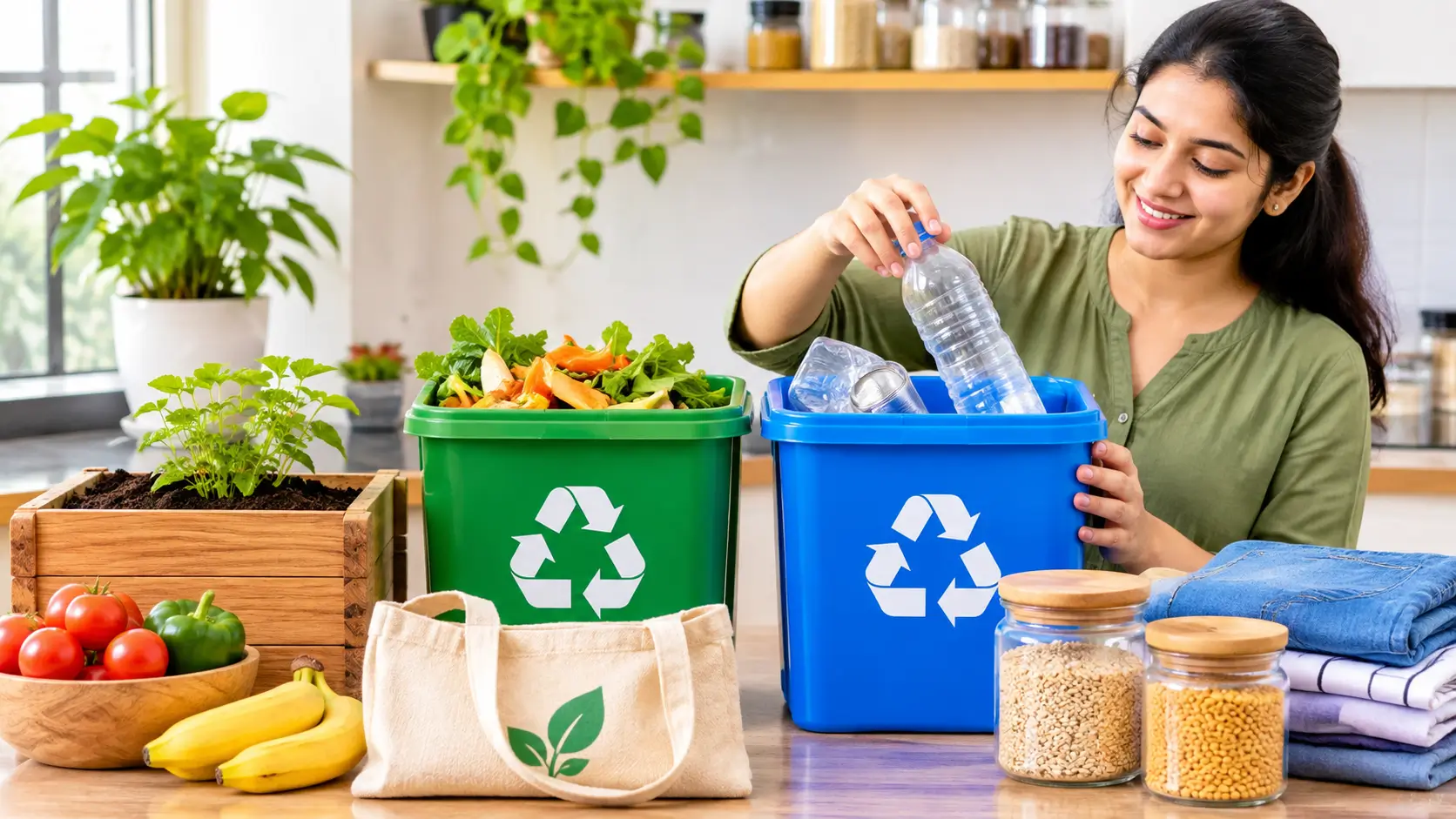
Have you ever looked at your dustbin at the end of the day and wondered how it fills up so quickly? From vegetable peels and food leftovers to plastic packets, milk cartons, and delivery boxes, we throw away many things every day. Most Indian homes generate a variety of trash. We produce food waste in our kitchens. Plastic packaging and cardboard boxes are added to online purchases. We also discard used clothing, bottles, newspapers, and other household items.
The good news is that we can reduce much of this waste with a few simple changes. We do not need expensive products or a completely different lifestyle. Small habits like carrying a cloth bag, using leftover food, and separating dry and wet waste can make a real difference.
Why Is It Important to Reduce Waste at Home?
Waste does not disappear after we throw it into a dustbin. Municipal workers collect it and transport it to waste processing sites or landfills. Some waste can take years to break down. Plastic waste can also pollute rivers, lakes, and soil.
Reducing waste at Home helps us in several ways.
- It keeps our surroundings clean: Less waste means fewer overflowing dustbins and cleaner neighbourhoods. It also helps reduce the amount of rubbish that reaches open spaces.
- It saves money: When we use things carefully and avoid unnecessary shopping, we spend less. Reusing old containers and reducing food waste can also lower household expenses.
- It protects natural resources: Making new products requires water, energy, and raw materials. Reusing and recycling items can reduce the need for fresh resources.
- It reduces pressure on waste management systems: Indian cities generate large amounts of municipal waste. Every household that produces less waste makes waste collection and management easier.
15 Simple Ways to Reduce Waste at Home
You do not need to follow all these ideas from the first day. Start with two or three habits and slowly add more.
1. Separate Wet and Dry Waste
Separating household waste before discarding it is one of the simplest ways to manage it. Keep two different dustbins in your kitchen. Use one for wet waste and another for dry waste. Wet waste includes vegetable peels, fruit skins, leftover food, and tea leaves. Dry waste includes newspapers, cardboard, plastic bottles, metal cans, and clean packaging materials. This simple habit makes waste collection and recycling easier. It also helps prevent food waste from mixing with recyclable materials.
2. Start Composting Kitchen Waste
Indian kitchens produce a lot of organic waste every day. Instead of throwing vegetable peels and fruit scraps into the dustbin, you can turn suitable kitchen waste into compost. Organic waste is transformed into nutrient-rich material for plants through the natural process of composting.
A little compost bin in your garden or on your balcony is a good place to start. Add vegetable peels, fruit scraps, dry leaves, and other suitable organic materials. Avoid adding plastic, meat, dairy products, and oily food to a basic home compost bin. These materials can create problems with smell and pests. Compost can help improve the soil in your home garden.
3. Carry Cloth Bags While Shopping
Plastic carry bags often become unnecessary waste after a single use. You can avoid many of them by carrying reusable cloth bags. Keep two or three cloth bags near your main door. You can also keep a folded bag in your office bag or vehicle. Use these bags when buying vegetables, groceries, clothes, or other household items. This small habit is especially useful for people who visit local markets regularly.
4. Avoid Buying Single-Use Plastic Products
Many everyday products come in disposable plastic packaging. Plastic straws, disposable cups, plates, and cutlery often create unnecessary waste. Try using reusable alternatives wherever practical. For example, carry a reusable water bottle when travelling. Use steel plates and glasses at home instead of disposable ones. You can also keep reusable cutlery at your workplace.
5. Plan Your Grocery Shopping
Unplanned grocery shopping often leads to food waste. We sometimes buy more vegetables, fruits, and dairy products than we can use. Before you go to the market or place an online grocery order, make a shopping list. Check your refrigerator and kitchen shelves first. Buy only what your family needs for the next few days. For example, if your family consumes tomatoes regularly, purchase an appropriate quantity instead of buying a large stock that may spoil. Good grocery planning saves both food and money.
6. Store Food Properly
Sometimes food goes to waste because we do not store it correctly. Keep fruits and vegetables in suitable storage conditions. Use airtight containers for dry food items such as rice, pulses, flour, and snacks. Older food items should be kept in a visible location. This serves as a reminder to use them prior to opening more recent packets. Examine food labelling and storage guidelines as well. Proper storage minimises needless waste and prolongs the freshness of food.
7. Reuse Glass Jars and Plastic Containers
Consider whether you can repurpose an empty container before discarding it. Glass jars from pickles, sauces, and other food products can store spices, pulses, and homemade snacks after proper cleaning. You can also reuse suitable plastic containers for household storage. Make sure they are clean and safe for their intended use. Old containers can help organise your kitchen without spending money on new storage products.
8. Use Leftover Food Creatively
Food waste is a common problem in many Indian households. We often cook extra food and forget to use the leftovers. Instead of throwing away properly stored food, try using it in another meal. For example, you can use leftover dal to make dal paratha. Extra rice can become lemon rice or fried rice. Leftover vegetables can go into sandwiches or stuffed parathas. Always store leftovers safely in the refrigerator and check their condition before eating. Do not consume food that smells unusual or shows signs of spoilage.
9. Donate Old Clothes and Household Items
Many people throw away clothes and household products simply because they no longer use them. Before throwing these items away, check whether someone else can use them. You can give clothes, shoes, school bags, books, and household things that can still be worn to local charities or people who need them. Make sure that the things you donate are clean and can be used. Things that are broken or dirty might not be good enough to donate. Giving useful things a second life reduces waste and helps other people.
10. Repair Items Instead of Replacing Them
A small problem does not always mean you need to buy a new product. A loose chair leg, broken bag zipper, or damaged electrical wire may have a simple repair solution. You can contact a local repair shop instead of replacing the entire item. Repairing products can save money and reduce unnecessary waste. However, always use a qualified professional for electrical and other potentially dangerous repairs.
11. Reduce Paper Usage
We receive many paper bills, receipts, advertisements, and documents. A large amount of this paper eventually ends up in the dustbin. Choose digital bills and statements whenever possible. Avoid printing documents unless you really need a physical copy. You can also reuse one-sided printed paper for rough notes and shopping lists. Once you finish using newspapers, magazines, and cardboard, keep them separate from wet waste so they can enter the appropriate recycling process.
12. Buy Products With Less Packaging
Packaging creates a lot of household waste. Some products come with multiple plastic layers, cardboard boxes, and unnecessary wrapping. Whenever possible, choose products with simple or recyclable packaging. For example, you can buy loose vegetables from local markets instead of choosing heavily packaged options. You can also consider larger refill packs when they make sense for your family’s needs. However, check product quality and storage requirements before buying in bulk.
13. Reuse Old Towels and Clothes
Old clothes do not always need to go into the dustbin. You can cut old cotton T-shirts and towels into cleaning cloths. These are useful for cleaning kitchen surfaces, wiping furniture and washing vehicles. Old bedsheets can also work as dust covers or cleaning rags. This is a simple way to reduce textile waste while avoiding the need to buy extra cleaning cloths.
14. Avoid Unnecessary Online Shopping
Online shopping makes buying products easy. However, frequent purchases can increase packaging waste. Before ordering something, ask yourself whether you really need it. Avoid buying duplicate products or items that you may never use. If you need only one small item, consider buying it from a nearby shop when practical. You can also combine orders for things you need into fewer ones if you can. This cuts down on packaging that isn’t needed and helps keep costs down.
15. Teach Children to Avoid Waste
Children learn many habits by watching their parents. If they see family members reusing products and separating waste, they are more likely to follow the same practices. Encourage children to use both sides of paper. Teach them to switch off lights when leaving a room and avoid wasting food. You can also involve them in simple activities such as sorting recyclable materials or watering plants with suitable reused water. Make these activities enjoyable rather than treating them like daily punishment.
How to Manage Household Waste in an Indian Home
Managing household waste becomes easier when every family member follows a simple routine. Here is an example of how you can organise waste at home.
| Type of waste | Examples | What to do |
| Wet waste | Vegetable peels, fruit scraps | Compost where suitable |
| Dry recyclable waste | Paper, cardboard, metal cans | Keep clean and separate |
| Plastic waste | Bottles and containers | Reuse or send for recycling |
| E-waste | Old chargers, phones, batteries | Use authorised collection points |
| Hazardous household waste | Certain chemical containers and products | Follow local disposal guidance |
Remember that not every item can go into a regular recycling bin. Check your local municipal waste collection rules before disposing of special waste.
How to Create a Simple Waste Management Routine
You can follow these three simple steps:
- Morning: Keep separate bins for wet and dry waste. Put suitable kitchen scraps into your compost bin if you compost at home.
- During the day: Avoid disposable products and reuse containers wherever practical. Keep recyclable materials clean and dry.
- Evening: Check the kitchen and living areas. Separate any mixed waste and keep recyclable materials ready for collection.
Ask every family member to follow the same routine. This makes waste management easier for everyone.
Mistakes to Avoid While Reducing Household Waste
People often start waste reduction with good intentions but make a few common mistakes.
- Buying too many reusable products: You do not need to purchase several new bottles, bags and containers to reduce waste. Use the reusable items you already have.
- Mixing wet and dry waste: Mixing everything in one dustbin makes recycling and composting difficult. Keep separate bins from the beginning.
- Storing food without checking it: Reusing leftovers is helpful, but food safety should always come first. Store food properly and discard spoiled food.
- Expecting immediate results: Waste reduction is a gradual process. Do not feel disappointed if your household still produces some waste.
Focus on improving your daily habits rather than trying to become completely waste-free overnight.
Conclusion
You don’t have to buy expensive products or make big changes to your life to reduce waste at home. Simple actions like sorting trash into dry and wet items, composting food scraps, using cloth bags, and recycling old containers can make a big difference. Indian households can also reduce waste by planning grocery shopping, storing food properly, and donating usable clothes and household products. The most important thing is to start small and stay consistent.