
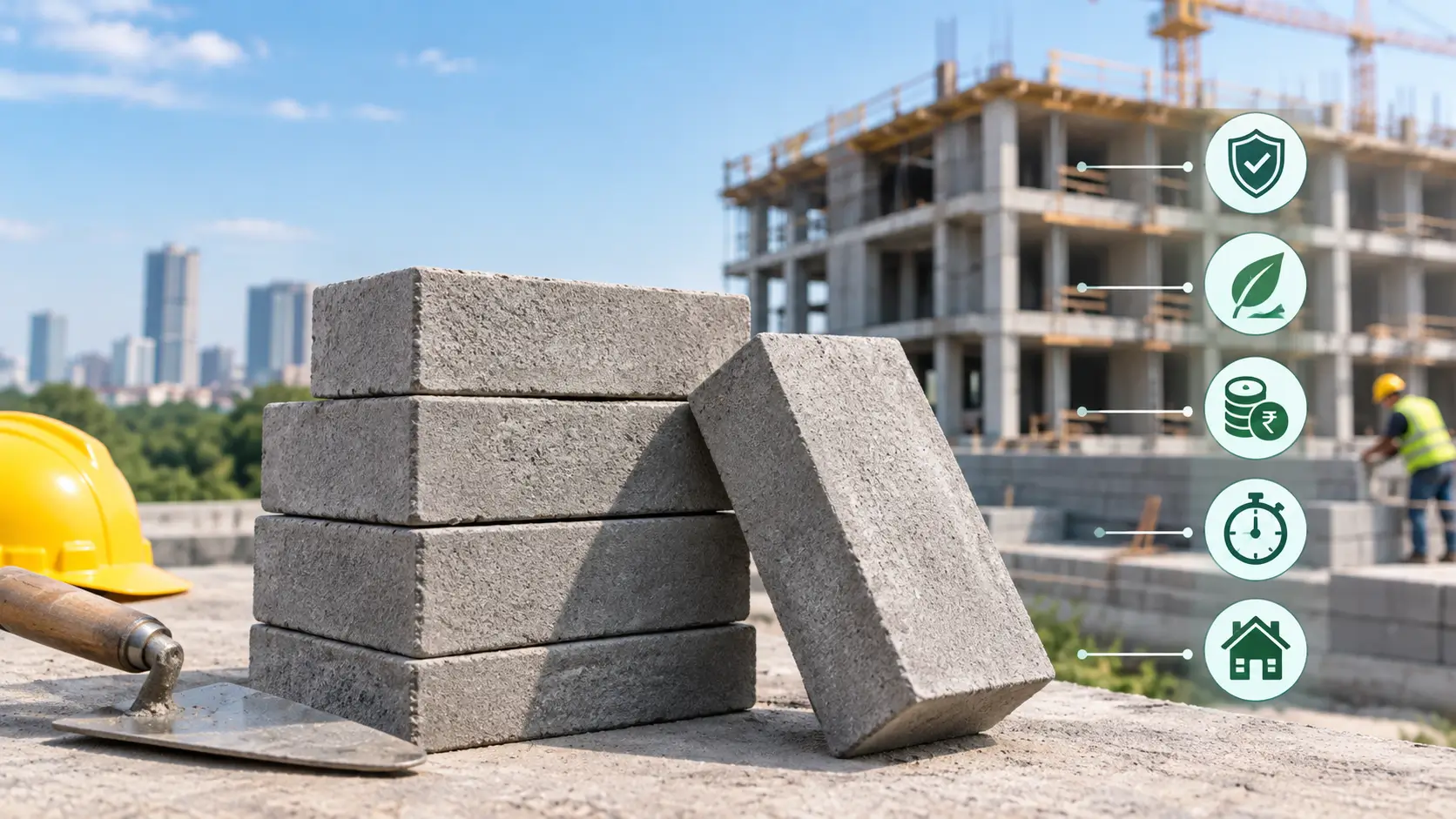
India’s construction industry continues to grow as more people build homes, apartments, offices, shops, and commercial buildings. Today, builders look for materials that offer strength, save time, and help control construction costs. Cement bricks have become a popular choice because they meet many of these needs.
Indian construction continues to rely heavily on traditional red clay bricks. Nonetheless, cement bricks have a number of advantages that make them appropriate for contemporary construction projects. When produced correctly, they can offer good strength, regular sizes, and quicker wall construction.
What Are Cement Bricks?
Cement bricks are a type of building block that are constructed using cement, sand, stone dust and any other aggregates that are suitable. In the manufacturing process, these materials are combined with water and then moulded using moulds. After that, they allow the blocks to undergo a controlled curing process, which allows them to gain strength.
“Cement bricks” are a common name for concrete bricks and other masonry blocks made from cement. But solid concrete bricks, hollow concrete blocks, and other cement-based items come in different forms and are used for different things. Builders use these products to construct walls in houses, shops, offices, boundary walls, and other buildings. The right product depends on the wall design and the building’s requirements.
How Are Cement Bricks Made?
The production of cement bricks involves a set of stages that are followed by manufacturers. In the first step of the process, they combine cement, sand, and appropriate aggregates in the appropriate sizes. Subsequently, they incorporate water into the mixture and then transfer it to moulds. It is possible for machines to apply pressure or vibration in order to produce blocks that are compact and uniform.
After moulding, manufacturers cure the blocks to help the cement develop strength. Proper curing plays an important role in the final quality of the product. The manufacturer must also check important qualities such as dimensions, strength, and water absorption. These checks help builders choose suitable materials for their projects.
Why Are Cement Bricks Gaining Popularity in India?
Cement bricks are taken into consideration by builders for contemporary construction for a number of reasons. These include the availability of various block designs, durability, construction speed, and measurements.
Let’s discuss the primary advantages.
1. Cement Bricks Offer Good Strength
Strength is one of the most important factors when choosing construction materials. A building needs walls that can handle the loads and conditions specified in its design. Good-quality concrete bricks can provide reliable strength when manufacturers use suitable materials and follow proper production and curing methods.
However, not every cement brick offers the same strength. Solid bricks, hollow blocks, and products from different manufacturers can have different properties. Before buying cement bricks, check their specified compressive strength and quality test results. For structural work, follow the recommendations of your architect or structural engineer.
2. They Can Make Construction Faster
Construction time affects labour costs and the overall project schedule. Cement-based masonry products often come in consistent sizes, which can help workers build walls more efficiently. Some concrete blocks are larger than traditional red bricks. Workers may need fewer blocks to cover the same wall area. This can reduce the number of individual units they need to handle and lay.
However, the actual time savings depend on the block size, wall design, worker experience, and construction method. For someone building a house, a more efficient wall-building process can help other activities move forward on schedule.
3. Uniform Sizes Help Reduce Wastage
The size and shape of traditional red bricks might vary. Additionally, poorly constructed bricks may have uneven surfaces or broken edges. The size of high-quality cement bricks is typically more uniform. This aids employees in maintaining more uniform joints and straighter walls.
Uniform blocks can also reduce the need for excessive cutting and adjustments. As a result, builders may reduce material wastage and make better use of their labour. Still, you should inspect the products before ordering them. Poor manufacturing can affect the dimensions and quality of cement bricks too.
4. Cement Bricks Can Support Cost Control
Many homeowners focus only on the price of a brick. However, the total cost of wall construction includes several other expenses. These include transportation, mortar, labour, cutting, plastering, and material wastage. A cheaper brick does not always produce the lowest final construction cost.
Cement bricks may help control these expenses when their size, quality, and installation method suit the project. For example, larger concrete blocks may reduce the number of units required for a wall. Consistent dimensions may also help workers maintain even joints. Before making a decision, compare the total cost of completing the wall rather than looking only at the price per brick.
5. They Offer Useful Design Options
Modern construction projects use different wall designs for different purposes. Manufacturers produce solid concrete bricks, hollow concrete blocks, and other cement-based masonry products to meet these needs. Solid units may suit certain wall applications, while hollow blocks may offer advantages in weight and wall construction.
However, hollow blocks do not suit every wall. Their use depends on the building design, expected loads, and other technical requirements. You can select the best kind for your project with the assistance of an engineer or builder.
6. Cement Bricks Can Offer Good Durability
Homeowners want walls that remain in good condition for years. Quality cement bricks can provide long-lasting performance when manufacturers produce them correctly, and workers install them properly. How long they last depends on things like the quality of the materials, how long they cure, how much water they are exposed to, and the condition of the finished wall.
For instance, a wall that gets a lot of rain needs the right details and protection against water getting in. Even strong bricks can’t always stop water problems if the building doesn’t drain well or has bad joints. For walls to last, they still need to be built well and maintained properly.
7. They Can Support More Efficient Use of Materials
Construction waste creates extra costs and puts pressure on natural resources. Manufacturers and builders can reduce some waste by choosing suitable materials and planning projects carefully. During wall construction, uniform cement bricks may assist in minimising waste and breakage. Depending on the manufacturer’s procedure and relevant regulations, certain concrete products may also employ recycled materials or appropriate industrial byproducts.
But not all cement bricks are made of recycled materials or provide the same environmental advantages. Carbon emissions are another byproduct of cement manufacture. Therefore, rather than presuming that every cement-based product is inherently environmentally good, builders should take into account the entire material profile.
Cement Bricks vs Red Bricks: Which Is Better?
Both cement bricks and red clay bricks can work well in construction. The better choice depends on the project, material quality, local availability, and building requirements.
| Feature | Cement bricks | Red clay bricks |
| Main materials | Cement, sand, and aggregates | Clay |
| Size consistency | Often consistent with quality manufacturing | Can vary between manufacturers |
| Construction speed | May improve with suitable block sizes | Depends on brick size and workmanship |
| Weight | Depends on the type of unit | Depends on size and density |
| Strength | Depends on the product and mix | Depends on the clay, manufacturing, and firing |
| Environmental impact | Includes the impact of cement and other materials | Includes clay extraction and kiln firing |
| Best choice | Depends on design and product specifications | Depends on design and product specifications |
Neither option wins in every situation. A good-quality red brick may perform better than a poorly manufactured cement brick. Similarly, a well-made concrete block may offer practical advantages over an inconsistent red brick. Always compare tested properties and total construction costs before choosing.
What Should You Check Before Buying Cement Bricks?
Choosing the right supplier matters as much as choosing the right material. Poor-quality blocks can create problems during construction and may increase repair costs later.
Before placing an order, consider these points:
- Check quality reports: Make sure to enquire about the required test results and product specifications from the provider. Check to see if the product satisfies the standards for the use that you intend to put it to.
- Inspect the blocks: Check for big cracks, broken edges, and changes in size that you can see. A visual inspection isn’t a replacement for proper testing of strength, but it can help find problems that are easy to see.
- Compare local prices: Get quotations from multiple suppliers. Include transportation and unloading charges in your comparison.
- Confirm the application: Tell the supplier whether you need blocks for an internal wall, external wall, boundary wall, or another purpose. Ask your engineer to confirm the suitable product.
- Ask about curing and storage: Proper curing helps concrete products develop strength. Poor storage and handling can also damage finished blocks.
These checks can help you avoid buying unsuitable materials simply because a supplier offers a lower price.
Are Cement Bricks Suitable for Every Building?
Cement bricks and concrete blocks do not suit every construction requirement. A small residential building may need different masonry products from a multi-storey commercial building. Some projects require specific fire-resistance, thermal, acoustic, or structural properties. You should also consider the local climate. Walls in hot regions may need careful thermal design, while buildings exposed to heavy rain need suitable moisture protection.
Most importantly, do not assume that a cement brick can carry structural loads simply because it looks strong. Some masonry products serve as non-load-bearing wall units, while others may suit specific structural applications when engineers design and specify them correctly. Follow the approved building design and use materials that meet the required standards.
What Is the Future of Cement Bricks in India?
Cement bricks and concrete blocks have a promising role in India’s construction industry. Growing demand for housing and commercial buildings encourages builders to look for materials that offer dependable quality and efficient installation. Improvements in manufacturing could also aid suppliers in producing more reliable goods. Cement-based masonry products can be made more reliable with careful material selection and improved quality control.
But cement bricks won’t be used in place of all traditional building materials. Local availability, shipping prices, building methods, and project requirements will continue to affect the materials chosen. The future will likely include several building materials working together. Builders will choose products based on performance, cost, availability, and environmental considerations.
Conclusion
Cement bricks are gaining attention because they can offer good strength, consistent dimensions, and efficient construction. They may also help builders manage labour costs and material wastage when they select suitable products and use them correctly. However, the quality of the brick matters more than its name. Poor manufacturing can reduce performance, while the wrong product can create problems even when it comes from a reputable supplier.
If you are planning to build a house or another property, compare cement bricks with red clay bricks based on tested quality, total installation cost, and the needs of your building. Cement bricks can be a practical choice for modern construction, but the best results come from choosing the right material and combining it with good design and skilled workmanship.