
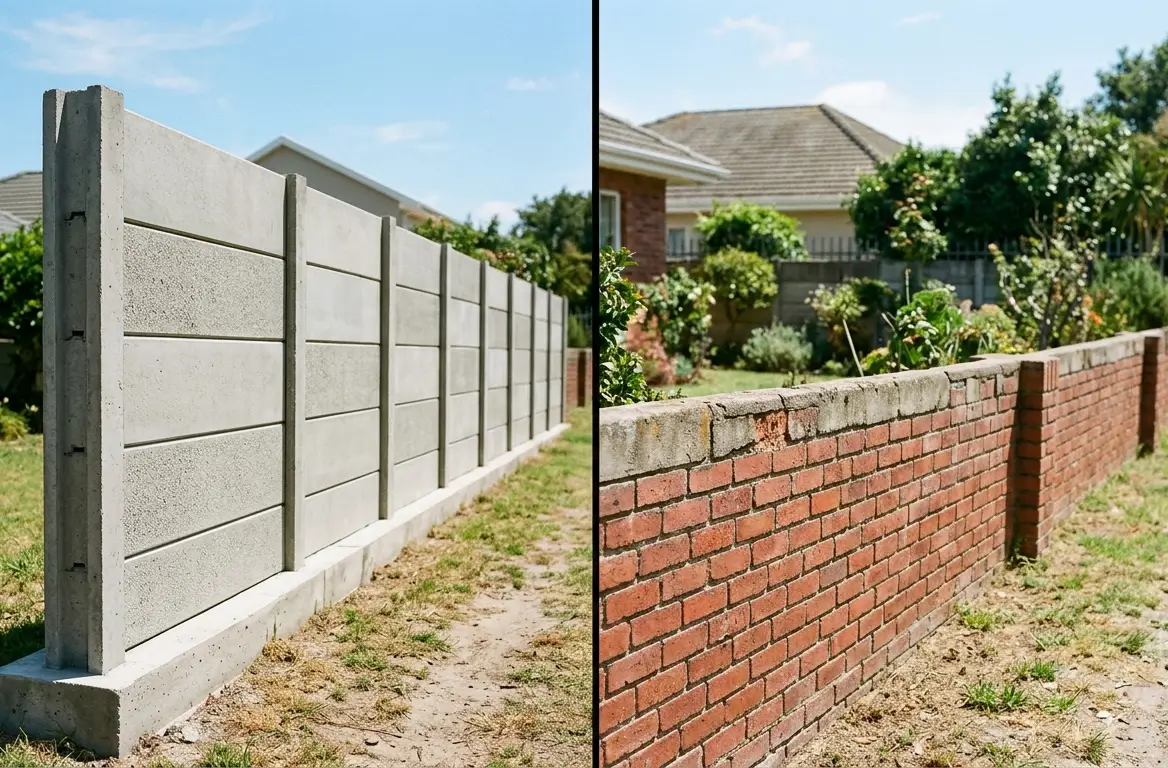
When you buy land, build a house, or create a commercial property, one of the first things you should do is build a compound wall. A good border wall keeps your land safe, gives you more privacy, and makes it clear what land you own. But picking the right type of wall can be hard when you have to compare how much it costs to build, how strong it is, and how much it costs to maintain. In India, precast concrete compound walls and traditional brick compound walls are the two most popular types. Both can do the same thing, but they are built differently, take longer to install, and cost more in total.
A precast wall is made of concrete panels that are prepared by the company that makes them before they are sent to the job site. Individual bricks or blocks are put together with mortar on the construction site to make a brick compound wall.
What Is a Precast Concrete Compound Wall?
A precast concrete compound wall is made up of panels and posts made of concrete that are made ahead of time. Workers bring these ready-made parts to the land and put them together according to the layout that was planned. The installation process usually involves preparing the ground, setting the posts, and fitting the concrete panels between them. The exact method depends on the product design and site conditions.
Main Benefits of Precast Concrete Walls
Precast walls offer several practical advantages for homeowners, builders, and commercial property owners.
- Faster installation: Workers can install ready-made panels much faster than building a long wall brick by brick. This can help when you need to secure a plot quickly.
- Consistent appearance: Manufacturers produce panels using moulds. This helps create a more uniform finish across the boundary.
- Less site work: Workers do not need to mix mortar and lay every brick along the entire wall. However, the project still needs proper foundations, alignment, and installation work.
- Easy planning for large areas: Precast systems can suit industrial plots, warehouses, farms, and large residential properties where builders need to cover long boundaries.
However, precast concrete walls also have limitations. Heavy panels need proper transportation and handling. The ground must support the wall, and workers must install the posts correctly.
What Is a Brick Compound Wall?
A brick compound wall uses clay bricks or suitable masonry blocks joined with mortar. Workers build the wall layer by layer and connect it to the foundation. Many Indian homeowners choose brick walls because local masons understand this construction method. You can also customise the wall’s height, thickness, shape, and finish according to your requirements.
Main Benefits of Brick Compound Walls
Brick walls remain a practical option for many residential and commercial properties.
- Flexible design: Masons can create different shapes, pillars, openings, and decorative features. This helps when you want a compound wall that matches your home’s design.
- Easy access to materials: Bricks, cement, sand, and other basic materials are widely available in many parts of India. Local availability can help simplify purchasing.
- Familiar construction method: Many local contractors have experience building brick walls. You may find it easier to arrange labour for smaller projects.
- Suitable for different finishes: You can plaster, paint, tile, or add other finishes to a brick wall. These choices help you create a more personalised appearance.
Brick walls also require proper workmanship. Weak foundations, poor mortar preparation, and inadequate curing can affect the finished wall. Construction also takes longer because workers must build the wall on-site.
Precast Concrete vs. Brick Compound Wall: Key Differences
The right choice depends on your budget, plot size, location, design preference, and construction timeline.
| Comparison point | Precast concrete wall | Brick compound wall |
| Construction method | Workers install ready-made panels and posts | Workers build the wall on-site |
| Installation speed | Usually faster | Usually slower |
| Labour requirement | May need a specialised installation team | Usually needs masons and helpers |
| Design flexibility | Depends on available panel designs | Offers greater flexibility for custom shapes |
| Transportation | Panels need suitable transport and handling | Materials can often arrive in smaller loads |
| Finishing | May need limited finishing, depending on the product | May need plastering and painting |
| Maintenance | Depends on concrete quality, joints, and foundations | Depends on masonry quality and surface finish |
| Best use | Large plots, industrial sites, and quick boundary installation | Residential properties and customised boundaries |
These points describe general differences. Product quality, local labour rates, transport distance, and site conditions can change the result.
Which Compound Wall Is Cheaper in India?
There is no single answer for every property. A precast concrete compound wall may cost less for some projects, while a brick wall may offer better value for others.
The final cost depends on several factors:
- Wall length and height: A longer or taller wall needs more material and may require a stronger foundation. Higher walls also need careful design to resist wind and other forces.
- Foundation requirements: Both wall types need a suitable foundation. Weak soil, uneven ground, or special site conditions may increase the cost.
- Transportation: Precast panels can become expensive to transport over long distances. A nearby supplier may offer better value.
- Labour charges: Precast systems can reduce on-site masonry work, but installation may require trained workers and suitable lifting equipment. Brick walls need masons and helpers for longer periods.
- Finishing expenses: Brick walls may need plastering and painting. Precast walls may also need surface treatment, joint finishing, or painting, depending on the product.
- Gate and pillar design: Heavy gates, decorative pillars, and special corners can increase the total project cost for either option.
Compare the Total Cost, Not Just the Material Price
Suppose you are fencing a residential plot. One contractor quotes a lower price for precast panels, while another offers a lower rate for brickwork. Do not compare only the quoted rate per running foot. Ask both contractors to include the foundation, posts or pillars, labour, transportation, finishing, gate supports, and site cleanup.
Also confirm whether the quoted height and wall thickness meet your requirements. This will help you compare similar specifications rather than two different products. For a fair comparison, collect at least two or three written quotations from local contractors. Ask them to explain any excluded expenses before you make a decision.
Which Wall Is Stronger and More Durable?
Both precast concrete walls and brick compound walls can last for years when builders use suitable materials and follow proper construction methods. However, the strength of a wall does not depend only on the material. The foundation, wall height, post spacing, reinforcement, mortar quality, and construction details also matter.
1. Durability of Precast Concrete Walls
If you build a precast wall well, it will last for a long time and not need much upkeep. This can happen if the concrete isn’t good, if the panels are damaged, if the connections between the posts aren’t strong enough, or if the base isn’t right. You should also consider drainage around the boundary. Water accumulation and soil movement can affect the wall’s stability.
2. Durability of Brick Compound Walls
A brick wall can also offer long service when workers build it correctly. Proper foundations, good mortar, suitable curing, and adequate protection against moisture help maintain its condition. Cracks may develop if the foundation settles unevenly or the wall lacks suitable structural support. Plaster and paint may also need repairs over time.
For either option, consult a qualified engineer when you plan a tall wall, build on weak soil, or face strong winds.
Which Option Is Better for Your Property?
Your property and construction goals should guide your decision.
Choose a Precast Concrete Compound Wall If:
- You need to secure a large plot quickly.
- You prefer a uniform and simple boundary design.
- You have access to a reliable precast manufacturer nearby.
- You want to reduce the amount of on-site masonry work.
Precast walls can work well for warehouses, industrial areas, farms, and large plots. Before choosing one, check panel quality and make sure the installation team can handle the site conditions.
Choose a Brick Compound Wall If:
- You want a customised design with decorative pillars.
- You prefer plastered and painted walls that match your home.
- You can arrange reliable local masons.
- Your property needs a design that does not suit standard precast panels.
Brick walls can suit individual homes, villas, and properties where appearance matters. They may also make sense when local brick supplies and labour offer a competitive overall price.
How Can You Reduce Compound Wall Construction Costs?
Cutting costs on a compound wall doesn’t mean settling for cheap materials. With smart planning, you can easily avoid hidden expenses and keep your budget intact.
- Lock in your plan early: Finalize the wall’s dimensions and design before buying materials. Altering plans mid-project spikes both labor and material bills.
- Assess the site and soil: Factor in land level and soil condition right from the start. An experienced contractor will design a proper foundation to prevent expensive structural fixes later.
- Compare detailed quotes: Get written estimates that outline the exact specifications. Don’t evaluate contractors on price alone—look at material quality, construction standards, and past experience.
It’s good to save money, but don’t forget that your concrete wall protects your home. Don’t skimp on the quality of the base or the strength of the structure just to save money at the start.
Conclusion
Indian property owners can get good use out of both precast concrete and brick construction walls. Most of the time, precast walls are easier to install and look the same. Brick walls give you more design options, and they may work well on sites where local materials and skilled masons are easy to find.
The cheaper option depends on your plot size, wall height, foundation needs, transport charges, labour costs, and finishing requirements. If you need a simple boundary for a large plot, consider getting a quotation for a precast concrete compound wall. If you want a customised wall around your home, compare the full cost of brick construction as well.