
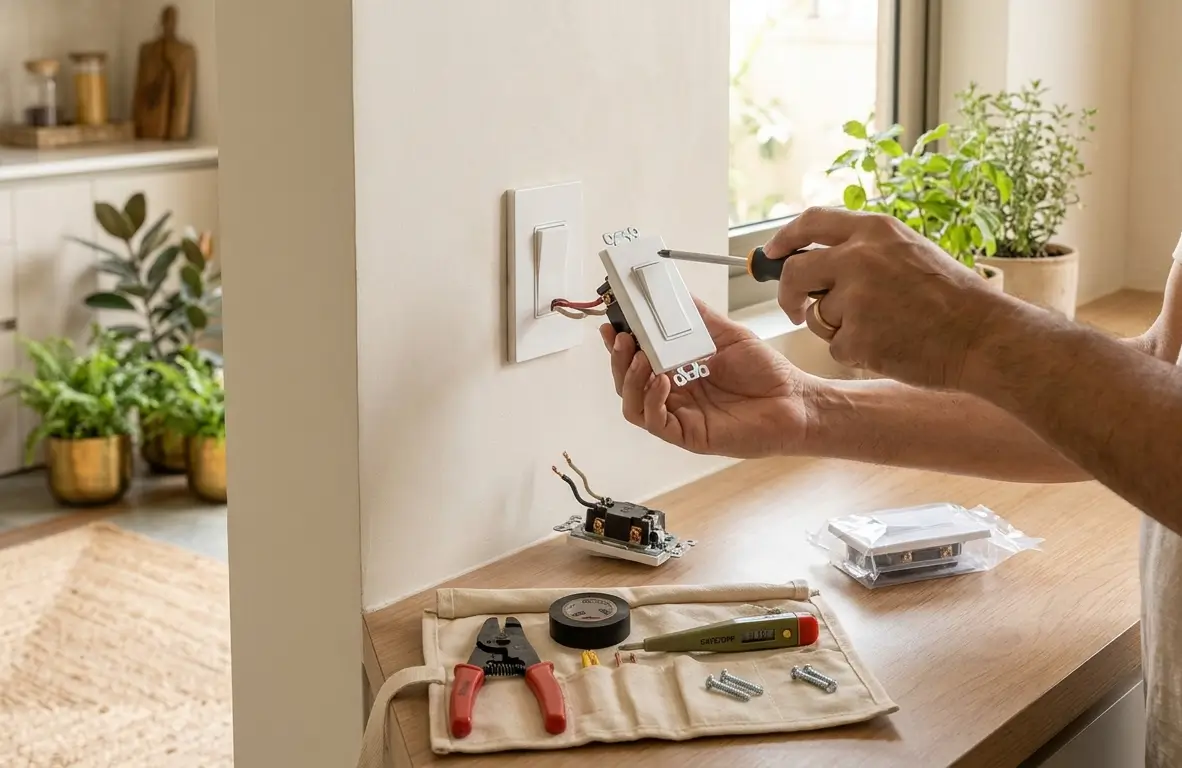
A light switch is one of the most commonly used electrical fittings in any home. We use it several times a day to turn lights on and off. However, like other electrical fittings, a switch can develop problems over time. You may notice that your light switch feels loose, makes a clicking or buzzing sound, becomes unusually warm, or stops working properly. Sometimes, the light may flicker when you operate the switch.
Many homeowners wonder whether they can replace a light switch themselves or need an electrician. Although replacing a switch may look like a small job, it involves household electricity and can cause serious electric shocks or fires if someone handles it incorrectly.
When Should You Replace a Light Switch?
Not every lighting problem comes from a faulty switch. Sometimes, the problem comes from a damaged bulb, loose wiring, or another electrical component. However, certain signs indicate that your light switch may need attention.
1. The Switch Stops Working
You press the switch, but the light does not turn on or off. If the bulb works properly in another fitting, the switch may have developed a fault. An electrician can inspect the switch and check whether it needs replacement.
2. The Switch Feels Loose
A switch should sit firmly against the wall. If it moves when you press it, the mounting or internal parts may have become loose. Do not ignore a loose switch. Contact an electrician to inspect it before the problem gets worse.
3. You Notice a Burning Smell
A burning smell near a switch is a serious warning sign. It may indicate overheating or damaged electrical connections. Stop using that switch. If you can safely identify and operate the relevant circuit breaker without approaching the damaged fitting, switch off the circuit. Otherwise, stay away and contact a qualified electrician immediately.
4. The Switch Makes Unusual Sounds
A normal light switch should not produce continuous buzzing, crackling, or sparking sounds. These sounds may indicate an electrical fault. Avoid operating the switch and arrange a professional inspection.
5. The Switch Becomes Hot
A switch that feels unusually hot needs immediate attention. Heat may indicate a problem with the switch, its electrical connections, or the connected circuit. Do not continue using it until an electrician checks the problem.
What Type of Light Switch Do You Need?
Before replacing a light switch, understand the different types available in Indian homes.
COMMON LIGHT SWITCH TYPES
1. One-Way Switch
This switch controls a light from one location. You will commonly find it in bedrooms, kitchens, and smaller rooms.
2. Two-Way Switch
This arrangement allows you to control one light from two different locations. It is useful for staircases and long passages.
3. Modular Switch
Modular switches have a modern design and fit into modular switchboards. Many new Indian homes use this type.
4. Smart Switch
Smart switches allow users to control lights through compatible apps or home automation systems. Some models also support voice control.
Choose a replacement that matches the existing switch arrangement and the electrical requirements of the circuit.
How to Replace a Light Switch Safely
Replacing a light switch involves working with electrical wiring. A mistake can cause electric shock, short circuits, or fire. For this reason, homeowners in India should hire a qualified electrician to handle the actual removal and wiring of a switch. The following steps explain how to prepare for the work and what happens during a professional replacement.
Step 1: Identify the Problem
Start by understanding what is wrong with the existing switch. Check whether the light bulb works properly. If the light does not turn on, the problem may come from the bulb, switch, or electrical supply. Check for obvious damage like burn marks, cracks, or a broken switch button. Do not remove the switch cover or touch exposed wiring to investigate the problem.
Step 2: Turn Off the Electrical Supply
Before an electrician starts working, they must isolate the relevant electrical circuit. The electrician will identify the correct circuit breaker and switch off the supply. They must also use suitable equipment to confirm that the wiring has no electrical power. Never assume that a switch is safe just because you turned it off from the wall. The circuit may still carry electricity.
Step 3: Check the Existing Switch
The electrician will inspect the existing switch and its surrounding fittings. They will check for damaged parts, loose connections, signs of overheating, and other electrical problems. This inspection helps identify whether the switch alone needs replacement or whether the electrician must address a larger wiring issue.
Step 4: Select a Compatible Replacement Switch
Choosing the right replacement matters. The new switch should match the existing electrical arrangement. The electrician will also check its current rating, voltage rating, and suitability for the connected circuit. You should not select a switch based only on its appearance or price.
Step 5: Replace the Old Switch
After isolating the supply and confirming electrical safety, the electrician will remove the faulty switch and inspect the wiring. They will install the compatible replacement according to the manufacturer’s instructions and applicable electrical safety requirements. If they find damaged wires or other problems, they should address those issues before completing the installation.
Step 6: Test the New Switch
Once the electrician completes the installation, they will check the connections and restore the electrical supply when it is safe to do so. They will test the switch to confirm that it operates correctly. They should also check for unusual sounds, heating, or other signs of an electrical problem.
Tools and Materials an Electrician May Need
A professional electrician may use different tools depending on the type of switch and the condition of the existing wiring.
| Tool or material | Purpose |
| Insulated screwdriver | Suitable electrical installation work |
| Voltage tester or approved test equipment | Checking electrical safety |
| Replacement switch | Replacing the faulty fitting |
| Insulated tools | Reducing the risk of accidental contact |
| Mounting accessories | Securing the switch properly |
The electrician should select suitable equipment for the specific electrical installation. Do not treat this list as a DIY shopping list. Buying these tools does not make working on live or unverified electrical wiring safe.
How Much Does It Cost to Replace a Light Switch in India?
The cost depends on the type of switch, brand, location, and electrician’s service charges. A basic switch replacement may cost less than replacing a complete modular switchboard. Smart switches and specialised fittings may also cost more.
Here are the main factors that affect the total cost:
- Type of switch: Basic switches generally cost less than smart or specialised switches.
- Brand: Different electrical brands offer products at different prices. Choose a reliable product that meets the circuit requirements.
- Labour charges: Electricians may charge a minimum service fee or calculate their charges based on the work involved.
- Additional repairs: Damaged wiring, broken switchboards, or other electrical problems may increase the final bill.
Ask the electrician for an estimate before starting the work. Also, request a bill for the replacement product and installation service.
How to Maintain Light Switches at Home
You can reduce switch-related problems by following a few simple habits.
- Keep switches clean and dry. Never clean an electrical switch with a wet cloth.
- Avoid pressing switches with wet hands.
- Do not overload electrical sockets near the switchboard.
- Ask an electrician to inspect loose or damaged fittings.
- Replace cracked or broken switch plates.
- Keep children away from exposed wiring and damaged switchboards.
Regular attention can help you identify problems before they become serious.
Conclusion
A faulty light switch may look like a small household problem, but it deserves proper attention. Loose fittings, unusual sounds, burning smells, and excessive heat can indicate electrical faults that you should never ignore. Understanding the different types of switches and recognising common problems can help you make better decisions when replacing an old fitting.
Although you can identify the problem and purchase a suitable replacement, leave the actual electrical work to a qualified electrician. Proper circuit isolation, safety checks, and correct installation help protect your family and home. Remember, saving a little money on an electrical repair is never worth risking your safety.