
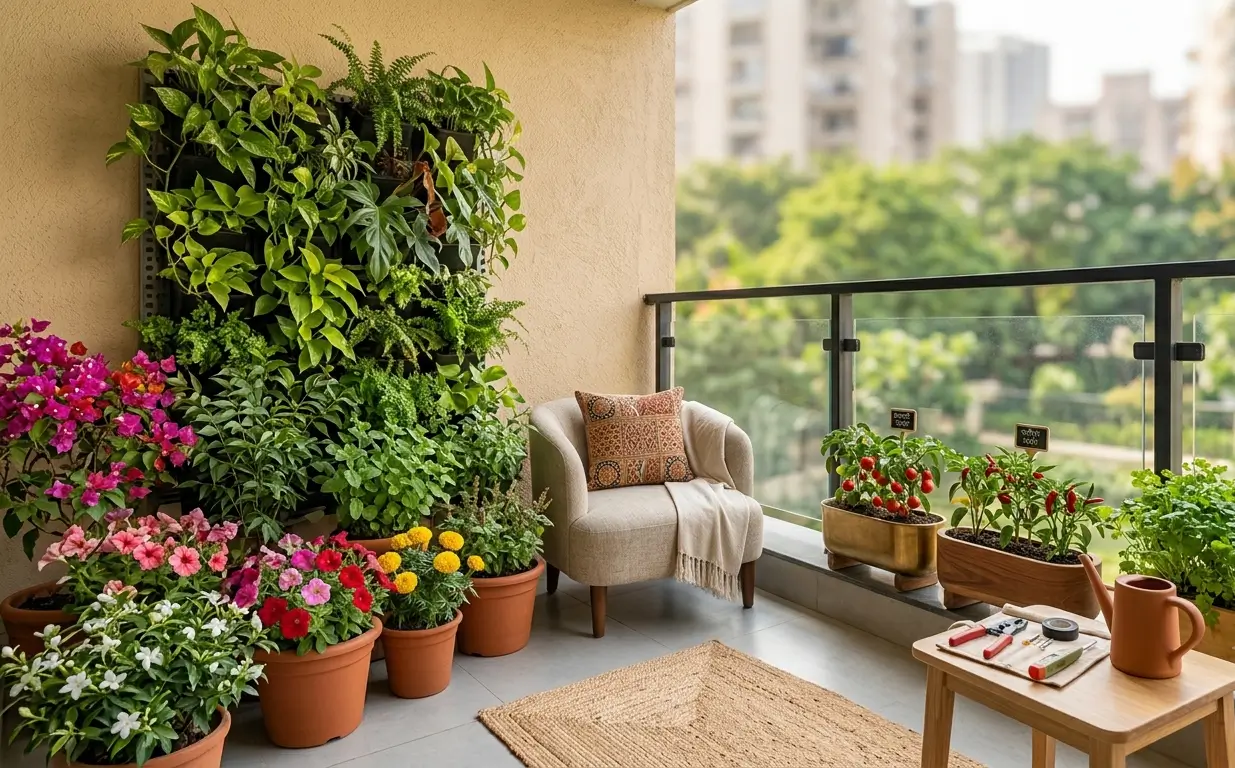
Living in a city means living in a flat or apartment with limited outdoor space. Many people dream of having a beautiful garden but think they need a large backyard to grow plants. The truth is that even a small balcony can become a lovely green space with the right planning. Balcony gardening is becoming popular among people who live in apartments across Indian cities. Whether you live in Delhi, Mumbai, Bengaluru, Pune, or Hyderabad, you can grow flowers, herbs, and vegetables in your available space.
You do not need expensive gardening equipment or professional knowledge to get started. A few suitable pots, good soil, enough sunlight, and regular care can help you build a healthy balcony garden.
1. Understand Your Balcony Before Starting
It is important to spend some time getting familiar with your balcony before you go out and buy any plants. Situations on each balcony are different from one another. While some are able to spend most of the day in the shade, some are subjected to direct sunlight throughout the whole day. Keep an eye on the amount and timing of sunshine that reaches your balcony. This will help you in selecting plants that will grow well in the space you have available.
Also, check the available floor area and ventilation. If your balcony faces a busy road, you may need to clean plant leaves more often because dust can collect on them. Start with a small gardening area instead of filling the entire balcony with pots. You can expand your garden once you understand how your plants respond to the conditions.
2. Select the Perfect Plants for Your Balcony
Plant selection plays an important role in balcony gardening. Some plants need strong sunlight, while others grow well in partial shade. Choose plants according to your balcony’s sunlight, space, and local weather.
a) Best Flowering Plants for Small Balconies
If you want to add colour to your balcony, consider these flowering plants:
- Marigold: Marigold grows well in sunny locations and produces bright flowers. It is a popular choice for Indian home gardens.
- Rose: Roses can grow in suitable containers. They need enough sunlight and regular care.
- Hibiscus: Hibiscus produces attractive flowers and can grow in large pots.
- Petunia: Petunias add colour to balconies and grow well during suitable cooler weather.
- Periwinkle: This plant can grow in warm conditions and produces flowers in different colours.
Select types that are appropriate for the temperature in your area and the amount of sunshine that reaches your balcony.
b) Best Herbs for Balcony Gardening
Herbs are useful because you can use them in everyday cooking. Tulsi, mint, coriander, curry leaves and green chillies are practical options for many Indian homes. You can grow mint in a separate container because it spreads quickly. Coriander grows well in suitable weather and works nicely in shallow containers. Tulsi can also make a pleasant addition to your balcony garden.
c) Easy Vegetables to Grow in Small Spaces
You do not need a large garden to grow fresh vegetables at home.
Consider growing:
- Tomatoes
- Green chillies
- Spinach
- Fenugreek
- Radish
- Beans
Start with vegetables that match your available sunlight and container size. Some plants need deeper pots or support structures as they grow.
3. Use Space-Saving Pots and Planters
One common problem with balcony gardening is limited space. You may want to grow several plants but cannot place large pots everywhere. The solution is to use different types of planters.
Choose Suitable Container Types
- Railing planters: These containers can help you use balcony railing space. However, choose secure fittings and check your apartment rules before installing them.
- Hanging planters: Hanging pots are a great way to add greenery without taking up a lot of floor space. It is imperative that the ceiling or support is capable of safely supporting their weight.
- Vertical planters: Vertical gardening systems allow you to arrange plants at different heights. They work well for herbs and smaller plants.
- Regular floor pots: Use floor pots for plants that need more root space. Keep larger containers in suitable positions without blocking the balcony entrance.
Remember that wet soil and water increase the weight of containers. Avoid overcrowding the balcony and never install heavy planters without checking the structural and safety requirements.
4. Select Good Quality Soil for Your Plants
Healthy soil helps plants develop strong roots and grow properly. Regular garden soil may become hard when you use it in containers. For balcony gardening, choose a suitable potting mix that provides good drainage and enough space for roots to grow.
A basic potting mix may include:
- Garden soil
- Mature compost or vermicompost
- Cocopeat
- Other suitable materials that improve drainage and soil structure
The exact mixture depends on the plants you want to grow. Compost adds organic matter and nutrients. Cocopeat helps retain moisture. Garden soil provides a growing base. Avoid using very compact soil in pots because it can restrict root growth and affect water drainage.
5. Give Your Plants the Right Amount of Sunlight
Sunlight is essential for most plants. However, different plants need different amounts of direct sunlight. Before arranging your pots, check which areas receive morning or afternoon sunlight. Place sun-loving plants such as marigolds and tomatoes in suitable sunny locations. Keep plants that prefer partial shade in areas with less direct sunlight.
During the hot Indian summer, strong afternoon sunlight can stress some plants. You can use a suitable shade net or move sensitive pots to a protected location. Do not assume that every plant needs direct sunlight throughout the day. Check the requirements of each plant before choosing its position.
6. Water Your Plants Properly
Watering is one of the most important parts of balcony gardening. Many beginners either water their plants too frequently or forget to water them. Both situations can affect plant health. Check the soil before watering. If the upper layer feels dry, check the moisture below it as well. Water according to the plant’s requirements rather than following a fixed daily schedule.
During summer, some pots may dry out quickly. During the monsoon, you may need to reduce watering because rainfall already provides moisture. Always use pots with suitable drainage holes. Excess water should flow out instead of collecting around the roots.
7. Use Organic Fertilizer for Healthy Growth
Plants need nutrients to develop leaves, roots, flowers, and fruits. Container plants may need regular nutrient support because they have limited soil available. You can use suitable organic fertilizers such as mature compost and vermicompost.
Add them according to the product instructions and the needs of your plants. Avoid adding too much fertilizer because excessive nutrients can damage plants. You can also start composting suitable kitchen waste at home. Vegetable peels, fruit scraps, and dry leaves can become useful compost when you manage the process properly. This approach helps reduce household waste while providing organic matter for your balcony garden.
8. Try Vertical Gardening for Very Small Balconies
If your balcony has limited floor space, vertical gardening can help you grow more plants. Instead of placing every pot on the floor, arrange suitable planters at different heights. You can use a vertical planter stand, wall-mounted plant holders, or a suitable shelving unit.
Grow smaller herbs and ornamental plants in these arrangements. Keep heavier pots on stable surfaces. Before fixing anything to a wall, check whether drilling is permitted and whether the structure can support the load. Also, make sure watering does not cause seepage or damage to the walls below.
9. Keep Your Balcony Garden Clean and Organised
A beautiful balcony garden needs regular cleaning. Dry leaves, fallen flowers and standing water can make the area untidy. Remove dead leaves and damaged plant parts regularly. Clean the space around pots and check drainage trays for excess water.
Keep gardening tools and fertiliser in a suitable storage area. Avoid placing unnecessary items between plants. If you live in an apartment, take care that water from your balcony does not drip onto neighbouring balconies or common areas. A clean and organised balcony makes gardening more enjoyable.
10. Protect Your Plants from Pests
Balcony plants can sometimes attract insects such as aphids, mealybugs and spider mites. Check the leaves and stems regularly. Look for small insects, sticky patches, damaged leaves or unusual spots. If you notice a problem, separate the affected plant from other plants when practical. Remove badly affected leaves and identify the pest before choosing a treatment. You can use a suitable garden pest-control product according to its label instructions. Avoid applying random household chemicals to plants. Regular inspection helps you identify pest problems early.
11. Follow Seasonal Gardening in India
Indian weather changes throughout the year. Your balcony garden should also change according to the season.
| Season | Suitable plants to consider | Gardening tips |
| Summer | Tulsi, chilli, okra | Protect sensitive plants from harsh afternoon sunlight |
| Monsoon | Mint, spinach, periwinkle | Check drainage and avoid overwatering |
| Winter | Peas, coriander, marigold | Grow suitable cool-season plants |
| Spring | Tomato, beans, petunia | Prepare containers for seasonal planting |
These are general suggestions. The best planting time depends on your city, local temperature and plant variety.
12. Balcony Gardening Mistakes to Avoid
Many beginners make small mistakes that affect plant growth. Keep these points in mind:
- Buying too many plants at once: Start with a few plants that are simple to care for. Before growing your garden, find out what they need in terms of sunlight and hydration.
- Using pots without drainage holes: Excess water can collect inside containers and damage roots. Choose suitable pots that allow extra water to escape.
- Overwatering plants: Daily watering without soil inspection can lead to issues. Verify the moisture content and modify irrigation according on the weather.
- Ignoring plant spacing: Plants that are close together fight for airflow and sunshine. Allow enough space for each plant to grow.
- Choosing plants without checking sunlight: A plant that needs strong sunlight may struggle in a shaded balcony. Match your plant selection to your available conditions.
Conclusion
Balcony gardening brings greenery to urban dwellings easily. If planned properly, a modest apartment balcony can host flowers, herbs, and vegetables. Check sunlight and choose plants for your climate. Use good pots, soil, and drainage. Water and fertilise plants as needed. You do not need to create a perfect garden in one day. Start with three or four plants and learn how to care for them. With patience and regular attention, you can turn your small balcony into a refreshing green corner where you can relax and enjoy nature every day.