
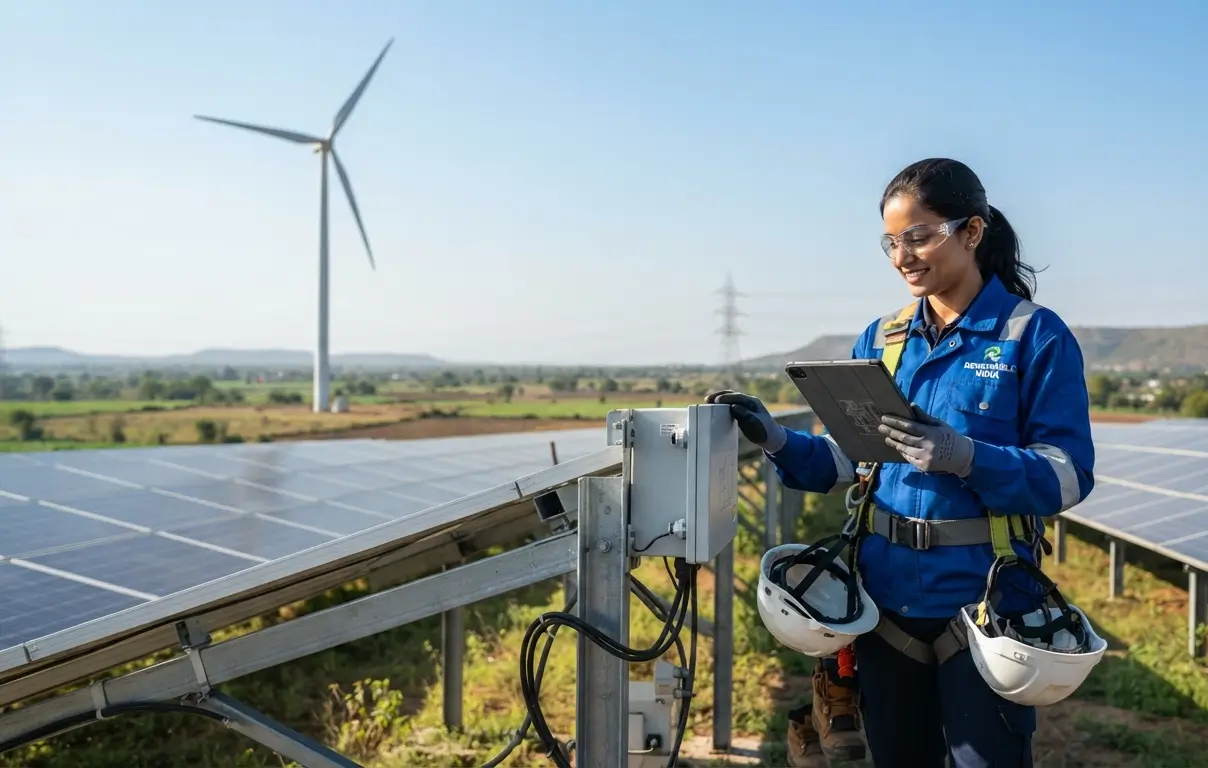
The way India produces and uses energy is changing. Solar panels are appearing on rooftops. Wind farms are expanding. Electric vehicles are becoming more common. Battery storage is growing, and green hydrogen is emerging as a new area of interest. This change is creating career opportunities for students and working professionals.
A career in clean energy is not limited to becoming a solar engineer. The sector needs electricians, technicians, engineers, project managers, finance professionals, sales teams, researchers, environmental experts, and many other skilled workers.
MNRE also continues to support renewable-energy education, training, internships and research. Its Human Resource Development programme for 2026-27 to 2030-31 includes short-term training, skill development, fellowships, internships and other learning initiatives.
What Is Clean Energy?
Clean energy means energy produced or used with lower environmental impact compared with conventional fossil-fuel-based energy. Solar, wind, hydropower and some forms of bioenergy are common examples of renewable energy. The wider clean-energy transition also includes areas such as battery storage, electric mobility, energy efficiency, smart grids and green hydrogen.
For example, a solar power plant needs much more than solar panels. It needs people to design the system, install equipment, connect electrical systems, monitor performance, maintain the plant, manage workers, purchase equipment, and handle customers or government approvals. This is why the clean-energy industry needs people from different educational backgrounds.
Why Are Clean Energy Careers Growing in India?
India’s renewable-energy sector has expanded rapidly over the past decade. The Eastern Mirror article also highlights the country’s increasing non-fossil electricity capacity and the resulting demand for trained workers.
The growth is not limited to large solar parks. Rooftop solar, solar pumps, battery storage, electric vehicles, energy-efficient buildings and decentralised power systems are creating work in cities as well as smaller towns. Government programmes are also increasing the need for trained manpower. MNRE’s current HRD programme specifically aims to build qualified and trained manpower for the renewable-energy sector. This means students do not necessarily need to move to a major metro city to find every type of clean-energy opportunity.
Career Options in the Clean Energy Sector
One of the biggest advantages of this field is the number of different career paths available.
1. Solar Energy Jobs
Solar is one of the most visible parts of India’s clean-energy industry.
Possible jobs include:
- Solar PV installer
- Solar technician
- Solar design engineer
- Site engineer
- Solar project engineer
- Operations and maintenance technician
- Solar sales executive
- Solar project manager
- Solar energy consultant
A technician may work on installing and maintaining rooftop systems while an engineer may design larger solar projects. People with business and sales skills can also work with solar companies that sell systems to homes, shops, factories, and institutions.
2. Wind Energy Careers
Wind power requires professionals from electrical, mechanical, and civil engineering backgrounds. Jobs can involve turbine maintenance, electrical systems, site assessment, project management, construction and operations. Mechanical engineers may work with turbine components while electrical engineers can work on power systems and grid connections.
3. Hydropower and Small Hydro Jobs
Hydropower remains another important part of India’s electricity system. Career opportunities can involve civil construction, turbine maintenance, electrical systems, project planning, and plant operations. Small hydro projects can also create opportunities in areas where local water resources can support smaller power-generation systems.
4. Battery and Energy Storage Careers
Renewable energy does not always produce electricity when people need it. Solar power depends on sunlight and wind power depends on wind conditions. Energy storage can help manage this problem. This is creating opportunities in:
- Battery technology
- Battery management systems
- Energy storage design
- Electrical engineering
- Battery testing
- Operations and maintenance
- Energy storage project management
Students interested in electrical engineering, electronics, chemistry or materials science can explore this area.
5. Electric Vehicle Careers
The clean-energy transition is also connected with electric mobility. Electric vehicles require batteries, motors, charging systems, power electronics, software, and electrical infrastructure. This creates career opportunities in EV manufacturing, battery systems, charging infrastructure, service and maintenance, research and software. Students interested in automobiles and electronics can consider this growing area.
6. Green Hydrogen Careers
Green hydrogen is another emerging area within India’s clean-energy transition. The National Green Hydrogen Mission includes skilling, upskilling, and reskilling efforts to develop a trained and industry-ready workforce across the green hydrogen value chain. Career areas can include:
- Hydrogen production
- Electrolyser technology
- Chemical engineering
- Plant operations
- Safety
- Storage and transportation
- Research and development
- Project management
This field is more specialised, so students interested in chemical, mechanical, electrical or related engineering disciplines can explore higher education and specialised training.
Clean Energy Careers for Non-Engineers
You do not always need an engineering degree to work in clean energy. This is an important point for students from commerce, management and humanities backgrounds. Clean-energy companies also need:
- Accountants
- HR professionals
- Sales executives
- Digital marketing professionals
- Business development managers
- Procurement executives
- Supply chain professionals
- Project coordinators
- Finance professionals
- Sustainability professionals
- Content and communication specialists
For example, a solar company may need a commerce graduate to manage accounts and a marketing graduate to generate leads. A renewable-energy company may also need a project manager who understands business operations rather than designing electrical systems.
A. Courses After Class 10
Students who want a practical career can consider vocational training or diploma-level education. Possible routes include electrical work, solar installation, electronics, mechanical systems and related technical trades.
Short-term skill programmes can also be useful for students who want to enter the workforce sooner. The exact eligibility, course duration, and certification depend on the institution and programme. Students should check the current course details before enrolling.
B. Courses After Class 12
Students from the science stream have several options.
1. Engineering Degrees
Common degree choices include:
- B.Tech in Electrical Engineering
- B.Tech in Mechanical Engineering
- B.Tech in Civil Engineering
- B.Tech in Electronics and related fields
- Energy or renewable-energy-focused engineering programmes where available
These degrees can lead to technical roles in design, project execution, operations and research.
2. Science Degrees
Students can also explore bachelor’s degrees in physics, chemistry, environmental science or related subjects and later specialise in renewable energy, energy technology or sustainability.
3. Management Degrees
Students interested in the business side can pursue BBA, B.Com, economics or related degrees and later move into clean-energy sales, finance, operations, procurement or project management.
Postgraduate Courses for Clean Energy Careers
A postgraduate qualification can help students move into specialised or research-oriented roles. Depending on their background, students can consider:
- M.Tech in renewable energy
- M.Tech in energy systems
- M.Tech in power systems
- M.Sc in renewable energy
- M.Sc in energy or environmental science
- MBA in energy management
- Postgraduate programmes in sustainability
- Research programmes in energy technology
MNRE’s HRD framework includes support for higher studies and research in renewable-energy technologies. The right course depends on the student’s previous degree and the type of job they want.
Government Learning and Internship Opportunities
Government programmes can provide useful exposure for students who want to understand the renewable-energy sector.
MNRE’s Human Resource Development programme for 2026-27 to 2030-31 includes short-term training and skill development, scholarships or fellowships, renewable-energy education infrastructure, renewable-energy chairs, a virtual learning environment and a platform intended to connect trained manpower with potential employers.
MNRE also operates a National Renewable Energy Internship Programme. The programme is intended for students from engineering, science, management and other streams to gain exposure to renewable-energy activities. Students should always check the latest official notification because eligibility, seats, duration, and application conditions can change.
Skills for a Career in Clean Energy
A degree alone may not be enough. Students should try to build practical skills along with academic knowledge.
1. Technical Skills
Depending on the career path, useful skills include electrical systems, solar PV systems, power electronics, battery technology, energy auditing, data analysis, project planning and equipment maintenance.
2. Digital Skills
Clean-energy projects increasingly use software and digital monitoring. Knowledge of Excel, data analysis, basic programming, technical design software or project-management tools can be useful.
3. Communication Skills
A solar engineer may have to explain a technical problem to a customer. A project manager may have to coordinate engineers, suppliers and government authorities. Good communication can therefore be valuable even in highly technical jobs.
4. Business Skills
People working in sales, finance, procurement and management need to understand costs, contracts, customers and project economics. This creates opportunities for graduates from commerce and management backgrounds.
Career in Energy Efficiency and Sustainability
Clean energy is not only about producing renewable electricity. Using less energy is also important. Companies need experts to find energy waste and make buildings and factories run more efficiently. This creates job openings in energy management, energy audits, sustainability reporting, and environmental care. The Bureau of Energy Efficiency (BEE), which is part of the Ministry of Power, focuses on saving energy and hires technical experts for energy efficiency and climate-related projects.
Can You Start a Clean Energy Business?
The sector also offers opportunities for entrepreneurship. A person with suitable technical training and business knowledge may explore businesses such as solar installation, solar equipment distribution, maintenance services, energy consulting, or related services.
For example, a trained technician in a small town could provide rooftop solar installation and maintenance services to homes and local businesses. However, starting a clean-energy business requires more than buying equipment. Entrepreneurs need to understand technical standards, customer requirements, safety, finance, local regulations, and after-sales service.
What Is the Salary in Clean Energy Careers?
There is no single salary for a clean-energy professional. An entry-level solar technician and an experienced renewable-energy project manager will have very different compensation.
Salary can depend on:
- Educational qualification
- Technical skills
- Experience
- Job location
- Company size
- Project type
- Specialisation
- Professional certifications
- Management responsibility
Government jobs follow the pay structure mentioned in the relevant recruitment notification. Private-sector salaries can vary considerably between employers.
Clean Energy Career Roadmap for Students
A simple career plan can make the transition easier.
1. After Class 10
Build basic knowledge of mathematics, science, and electrical concepts. If you prefer practical work, explore suitable technical or vocational courses.
2. After Class 12
Choose a degree, diploma, or skill programme based on your interests. Students interested in technical careers can consider engineering or science. Students interested in business can choose management, commerce or economics and specialise later.
3. During College
Do not wait until the final year to gain practical experience. Look for internships, industry projects, workshops and training programmes. MNRE’s HRD programme specifically includes training and internship-related opportunities.
4. After Graduation
Choose one specific area rather than trying to learn everything. For example, you could focus on solar design, battery systems, energy efficiency, green hydrogen, sustainability, or clean-energy project management.
5. After Gaining Experience
You can move towards specialised technical roles, project management, research, consulting, or entrepreneurship.
Is Clean Energy a Good Career Choice?
Clean energy offers a wide range of career paths because the sector needs both technical and non-technical professionals. The important point is to choose a path that matches your education and interests.
Someone who enjoys electrical work may prefer solar installation or power systems. Someone interested in science may move towards energy research. A commerce graduate may find opportunities in finance or procurement. A management graduate may work in project management or business development.
The clean-energy sector is also changing quickly. New areas such as energy storage, electric mobility, green hydrogen, smart energy systems, and digital monitoring are adding new skills and job roles.
Final Thoughts
A career in clean energy does not follow one fixed route. You can enter the sector through a technical course, diploma, engineering degree, science degree, management programme, or specialised training. The best starting point is to understand what kind of work you actually want to do.
If you enjoy hands-on work, solar installation and maintenance may be suitable areas to explore. If you like engineering and technology, renewable-energy systems, batteries, or power systems may be worth considering. If you prefer business, finance, or communication, the clean-energy industry also needs professionals in these areas. The important thing is to combine education with practical skills and real industry exposure.