
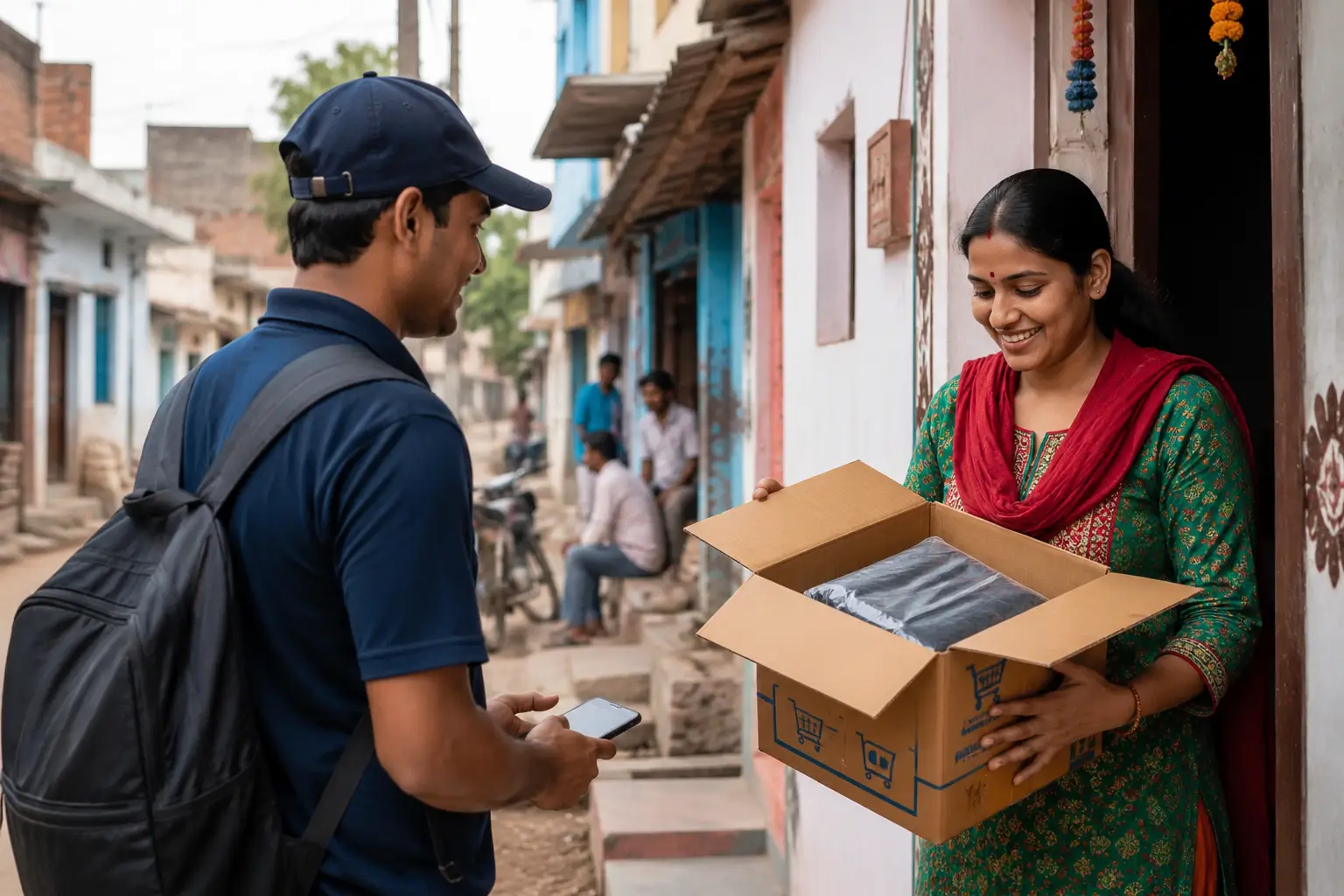
For a long time, when people talked about E-Commerce in India, they mostly thought about big cities such as Mumbai, Delhi, Bengaluru, Hyderabad, and Chennai.
That picture is changing quickly.
Today, people in smaller cities and towns are becoming an important part of India’s online shopping story. A customer sitting in a small town can order a smartphone, clothes, kitchen products, beauty items or products from a local brand without travelling to a large city.
The change does not come from one factor. Affordable smartphones, better internet access, digital payments, improving delivery networks, and growing consumer confidence have all helped online shopping reach beyond major metros.
Recent industry estimates show just how important this shift has become. A 2026 report cited by IBEF says Tier 2 and Tier 3 cities could contribute nearly 66% of new D2C orders in FY26.
This means India’s next major e-commerce opportunity may not come only from its biggest cities. A large part of the growth could come from places that were once considered difficult markets for online businesses.
Why Small Towns Matter So Much for E-Commerce
India has hundreds of cities and towns outside the major metropolitan areas. Many of these markets have growing incomes, younger consumers, and increasing access to smartphones and digital services. Earlier, a person living in a smaller town had fewer choices. Local shops could only stock products that had enough demand in that particular area.
Online shopping changed that situation. A customer can now search for a product from thousands of options and order it from almost anywhere. This gives consumers access to products that may not be available in nearby shops. At the same time, businesses can reach customers without opening physical stores in every city. That creates a useful opportunity for both buyers and sellers.
Online Shopping Is Moving Beyond Metro Cities
The shift towards smaller cities is not just an assumption.
According to IBEF, Tier II and Tier III cities and rural areas played an important role in e-commerce growth during 2024. Several major platforms reported strong demand from non-metro markets during festive shopping periods.
Another industry estimate suggests that the share of online shoppers from Tier II and Tier III cities could rise further in the coming years. This shows an important change in Indian consumer behaviour. People in smaller cities do not simply want cheaper products. Many also want better brands, more choices, and convenient shopping.
Smartphones Have Changed Consumer Behaviour
The smartphone has become one of the biggest drivers of online shopping in India. A person does not need a computer to visit an online marketplace. A smartphone can handle product searches, price comparisons, payments, order tracking, and customer reviews.
This makes e-commerce much easier for people who may never have used a traditional computer regularly. The growing internet user base also supports this shift. India had more than one billion internet subscribers by December 2025, according to figures cited by IBEF. As smartphone and internet access continues to spread, more consumers can participate in digital commerce.
UPI Makes Online Shopping Easier
Payment is another important part of the story. Digital payments are now a normal part of daily life for millions of people in India. UPI makes it easy to pay for things without needing cash or cards.
For a small-town customer, simple payment options can remove one of the barriers that once made online shopping uncomfortable. Customers can pay digitally and receive confirmation almost immediately. This convenience can encourage people to use online shopping more regularly.
Better Logistics Are Opening New Markets
A website cannot succeed in a town if it cannot deliver products there reliably. Logistics therefore plays a major role in the growth of Indian e-commerce. Delivery networks have expanded considerably, helping businesses reach customers beyond major urban centres. Companies are also improving warehouses, fulfilment systems and last-mile delivery.
The Indian government’s Economic Survey has also highlighted the role of e-commerce export hubs in connecting small businesses, artisans and local producers with wider markets. Better logistics can help a seller in a smaller city reach customers across India rather than depending only on nearby buyers.
Small-Town Customers Are Becoming More Confident
Earlier, some customers hesitated to order expensive products online because they worried about product quality, payment safety, or returns. Customer reviews, easy returns, cash-on-delivery options on eligible orders, and better brand awareness have helped build confidence.
People also see friends and family members ordering online. Once someone has a good experience with an online purchase, they may become more comfortable ordering again. This creates a cycle where online shopping becomes a normal part of household purchasing.
What Are People Buying?
The demand from smaller towns covers many categories. Fashion, beauty products, electronics, home products, personal care items, groceries, and lifestyle products can all find customers outside major cities. However, consumer preferences can differ from one region to another.
A customer in Punjab may have different preferences from someone in Kerala or Assam. Language, climate, culture, income, and local habits can influence buying decisions. Successful e-commerce businesses therefore need to understand local customers instead of treating India as one large uniform market.
The Rise of Local and D2C Brands
One of the most interesting parts of this growth involves small businesses. A local entrepreneur can now create a product, build an online presence, and sell directly to customers across India.
This is especially useful for businesses selling specialised products. For example, imagine a small business making traditional snacks, handmade products, regional clothing or natural personal-care products.
Earlier, the business might have depended mainly on local customers or distributors. E-commerce can give the same business access to customers in distant cities. The growth of D2C brands is closely connected to this opportunity. Current industry estimates point to Tier 2 and Tier 3 cities becoming major sources of new D2C orders.
Local Sellers Can Reach National Customers
The biggest advantage for a small-town seller is reach. A shop owner does not necessarily need a physical outlet in Delhi, Mumbai, or Bengaluru to sell to customers there.
With the right product, pricing, packaging, delivery arrangement, and customer service, an online seller can build demand across different states. This can create opportunities for artisans, manufacturers, home-based businesses and small brands.
Regional Languages Will Become More Important
English is not the only language that matters online. India has a huge number of shoppers who prefer searching for products, reading information, and talking in their local regional languages. As e-commerce reaches deeper into smaller towns, businesses will need to make their websites, advertisements, product descriptions, and customer support easier for local consumers to understand.
A customer should not struggle to understand basic information about a product simply because the seller uses complicated English. Simple language can improve trust and make online shopping more comfortable.
Social Media Can Influence Small-Town Shopping
Social media has also changed how customers discover products. A person may see a product in a short video, recommendation, or social media post and then search for it online. This gives smaller brands an opportunity to build awareness without spending the same amount of money that traditional advertising may require.
Local creators and regional-language content can also help brands connect with specific communities. However, businesses still need to focus on product quality. Good marketing may bring the first customer, but a satisfactory product and reliable service can encourage repeat purchases.
Quick Commerce Will Not Be Limited to Big Cities Forever
Fast delivery has become a major part of India’s e-commerce story. Quick commerce initially focused heavily on major urban markets because those areas offered high population density and frequent orders.
But companies are increasingly exploring opportunities beyond traditional metro markets. The model will not work in exactly the same way everywhere. Population density, local demand, delivery distances, and operating costs matter.
Still, the broader trend shows that Indian consumers increasingly value convenience. People are becoming comfortable with the idea that products can reach their homes instead of requiring a trip to a shop.
Challenges Small-Town E-Commerce Still Faces
The opportunity looks strong, but businesses should not ignore the challenges. Delivery costs can become higher in areas with lower order density. Returns can also create additional expenses.
Some customers may still prefer buying certain products after physically checking them. Internet quality, digital awareness, and trust can also vary from one location to another. Businesses must therefore adapt their strategy instead of simply copying a metro-city model.
Trust Remains Important
A customer may forgive a slightly higher price if they trust the seller. Clear product descriptions, genuine photographs, transparent pricing, responsive customer support, and reliable returns can make a big difference. Small-town e-commerce growth will depend not only on getting new customers but also on keeping those customers satisfied.
What This Means for Small Businesses
The growing reach of e-commerce creates an interesting opportunity for Indian entrepreneurs. A small business can start by understanding one specific customer group instead of trying to sell everything to everyone.
For example, a seller could focus on regional food products, handmade items, ethnic clothing, home décor, beauty products, or another category where the business has a genuine advantage. The important part is to solve a real customer problem.
The Future of E-Commerce May Be More Regional
India’s e-commerce market is still expanding. But the important question is not simply how big the market becomes. The more interesting question is where the next customers will come from.
Smaller cities, towns and rural areas could play a much bigger role than they did in the early years of Indian online shopping. This will push businesses to think differently about pricing, products, language, delivery and customer support.
Conclusion
The next phase of Indian e-commerce growth may not come only from India’s biggest cities. Small towns are becoming important markets because consumers now have better access to smartphones, internet services, digital payments and delivery networks. At the same time, local businesses have a chance to reach customers far beyond their own neighbourhoods. The opportunity is particularly interesting for D2C brands, regional sellers, artisans and small businesses that understand specific customer needs.
But success will require more than simply putting products online. Businesses need reliable delivery, fair pricing, simple communication, good customer service and products that genuinely solve customer needs. India’s online shopping story is therefore becoming more regional, more inclusive and more competitive. The next big customer may not live in a metro city. They may live in a small town, order through a smartphone and discover a brand that was once hundreds of kilometres away. That is what makes India’s small-town e-commerce opportunity so significant.