
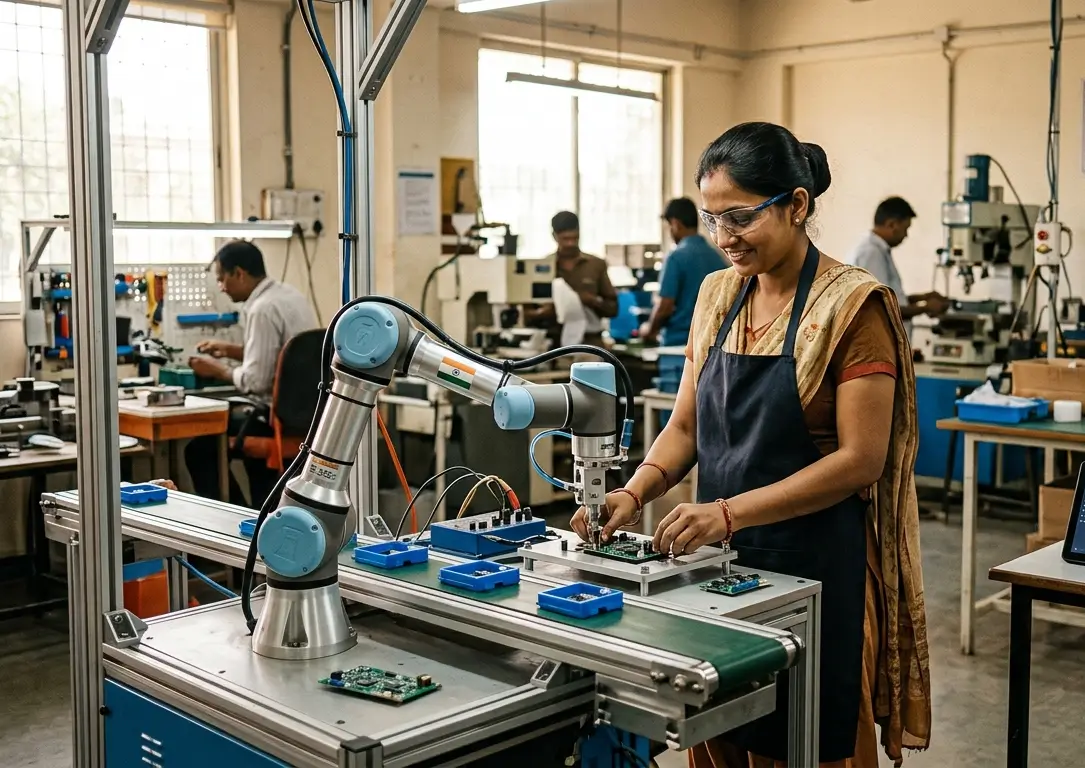
Running a small enterprise in India comes with many responsibilities. A business owner may have to manage customers, employees, payments, invoices, stock, suppliers, and marketing, all while trying to keep expenses under control. When the workload increases, hiring more employees may look like the easiest solution. However, higher salaries and other employee-related expenses can put pressure on a small business.
This is where automation can make a real difference. Enterprise automation does not always mean buying expensive machines or installing complicated technology. For a small enterprise, automation can simply mean using software to handle repetitive work that employees normally perform manually. Creating invoices, recording payments, tracking stock, sending reminders, and managing appointments are a few examples.
When an enterprise automates the right tasks, employees can spend less time on paperwork and repetitive activities. They can instead focus on customers, sales, problem-solving, and other work that needs human attention. For many small enterprises in India, this approach can help control costs without affecting the quality of service.
What Does Automation Mean for a Small Enterprise?
Enterprise automation means using technology to perform repetitive tasks with little or no manual effort. The system follows instructions and completes a particular activity automatically after the business sets it up.
Consider a small retail shop that receives many orders every month. Someone may need to record every sale, prepare an invoice, update inventory, and check whether the customer has made the payment. When employees perform these tasks manually, the work takes time and creates opportunities for mistakes.
An automated enterprise system can handle many of these activities. Once a sale takes place, the system can update the inventory and record the transaction. Depending on the software, it may also generate an invoice or help the owner track the payment.
The purpose of automation should not simply involve reducing the number of employees. A better goal involves reducing repetitive work so employees can use their time more effectively.
Why Indian Small Enterprises Are Turning to Automation
Small enterprises operate under constant pressure to control expenses. Rent, salaries, electricity, transportation, raw materials, inventory, and administrative costs can quickly add up. At the same time, businesses cannot always increase their prices because customers can compare products and services from several competitors.
Automation gives small enterprises another way to improve efficiency. Instead of trying to solve every problem by hiring additional employees, a business can first check whether technology can handle some repetitive activities.
For example, an employee may spend several hours every week preparing reports. If software can generate those reports automatically, the employee can use that time to contact customers, follow up on leads, or handle other important responsibilities.
Small enterprises also often operate with limited staff. One employee may handle several jobs during the day. Automation can reduce some of the routine workload and help the same team manage more business activities.
1. Accounting and Invoice Automation
Accounting and invoicing are among the areas where small enterprises can benefit significantly from automation. Enterprises need to create invoices, record expenses, track customer payments, and maintain financial information. When employees perform all these tasks manually, the process can take considerable time.
Accounting software can help organise these activities in one place. A business owner can create invoices digitally and maintain transaction records without depending entirely on paper registers. Some systems can also help businesses track unpaid invoices and send payment reminders.
This can become particularly useful when customers delay payments. Instead of asking an employee to remember every pending invoice, the system can help keep track of outstanding amounts.
Better financial records can also help owners understand where their money goes. They can identify unnecessary expenses, monitor cash flow, and review outstanding payments more easily. The business still needs human oversight, but automation can reduce much of the repetitive work.
2. Inventory Management Automation
Inventory management creates another challenge for retailers, wholesalers, and manufacturers. A business needs enough stock to meet customer demand, but holding too much stock can lock money into products that may take a long time to sell. Manual inventory tracking can make the situation more difficult. Employees may forget to update records after a sale or accidentally enter incorrect quantities.
Inventory management software can help businesses maintain updated stock records. When products move in or out of the business, the system can update the available quantity. Some systems can also notify the business when stock reaches a certain level. Imagine a store owner who sells popular gadgets. Instead of checking every shelf by hand, they use a simple software program to flag items that are running low so they know when to reorder. Automation does not make the purchasing decision for the business. It simply gives the owner better information at the right time.
3. Digital Payments and Automatic Records
Digital payments have become a regular part of enterprise in India. Small enterprises now receive payments through UPI, cards, bank transfers, and other digital methods. When you link payments straight to your accounting program, the actual benefit occurs. The technology updates your data automatically rather than requiring you to manually type in sales after each transaction.
This can save time for businesses that handle many transactions each day. It also makes it easier to check which customers have paid and which payments remain outstanding. For a small enterprise, reducing even a few minutes of manual work on every transaction can create meaningful savings over an entire month.
4. Payroll and Employee Management
Employee management involves several routine tasks. Businesses may need to track attendance, leave, working hours, and salary information. A company that manages these details manually can spend a lot of time maintaining spreadsheets and checking records.
Payroll and employee management software can simplify many of these activities. The business can maintain employee information digitally and use attendance records during the payroll process.
Automation can reduce repeated data entry and help minimise calculation mistakes. However, business owners should still review payroll information before processing salaries. Automated systems work according to the information they receive, so incorrect data can still create problems.
5. Customer Support Automation
Customer support can take up a large amount of time, particularly when customers repeatedly ask similar questions. A small online business, for example, may receive questions about delivery times, order tracking, return policies and payment methods. Employees may answer the same questions throughout the day.
Automation can handle some of these simple requests. A chatbot or automated response system can provide basic information and guide customers to the right page or department. However, businesses should not try to automate every customer interaction. Complicated complaints and unusual situations often require human attention. A good system handles simple questions automatically while allowing employees to take over when necessary. This approach can reduce the pressure on customer support staff without making the service feel completely impersonal.
6. Marketing Automation for Small Enterprises
Marketing involves a lot of repetitive tasks. Sending emails to consumers, following up with prospective customers, reminding customers of meetings, or communicating special offers are all possible tasks for a business. Marketing automation can help businesses manage some of these tasks.
For example, a service business can send an automatic appointment reminder before a customer’s scheduled visit. An online store can send a follow-up message after a purchase. A company can also organise customer communication based on previous interactions.
These small actions can save employees from remembering every follow-up manually. However, businesses should avoid sending excessive automated messages. Customers may stop paying attention if they receive too many promotional emails or notifications.
7. Automating Employee Communication
Communication becomes more difficult as a business grows. Employees often use email and messaging applications to discuss daily work, but important information can become difficult to find in long conversations. Project management and workflow systems can help businesses organise tasks, deadlines and responsibilities.
For example, a small digital marketing company can create a task for every client campaign. Employees can see what they need to complete and when the work is due. This can reduce the need for managers to ask employees about the progress of different tasks repeatedly. It also gives business owners a clearer view of ongoing work.
How Automation Reduces Hidden Business Costs
The biggest savings from automation do not always appear as a direct reduction in a monthly bill. Some savings come from reducing mistakes and unnecessary delays. Imagine an employee enters the wrong quantity on an invoice. The customer notices the mistake and contacts the company. Another employee then needs to check the original order, correct the invoice, and send it again.
One small data-entry mistake can consume time for several people. Inventory mistakes can create similar problems. If a business fails to notice that a popular product is running low, it may lose sales while waiting for new stock. Automation can reduce these avoidable problems by keeping information organised and reducing repeated manual entries.
How Small Businesses Should Start With Automation
Small enterprises should not try to automate every process at once. Doing so can increase expenses and create confusion among employees.
Starting with a single, time-consuming, repeated task is a superior strategy. For one business, invoicing may be the biggest problem. For another, inventory tracking may create the most work. A service company may gain more from automated appointment reminders.
Before buying software, calculate how much time employees currently spend on the task. For example, if an employee spends 20 hours every month preparing invoices and following up on payments, a system that reduces the workload to five hours could save 15 working hours each month.
The business can then compare that saving with the cost of the software.
Conclusion
Small enterprises in India can use automation to reduce repetitive work, control costs, and improve everyday efficiency. They do not need expensive or complicated technology to get started. The smartest approach involves starting small. Find the task that consumes the most repetitive effort, calculate its current cost, and then look for a suitable solution.
A small enterprise does not need to automate everything to become more efficient. Even one well-chosen automated process can save employee time, reduce mistakes, and allow the owner to focus on customers and growth. The real purpose of automation is not to make a business look more modern. It is to help people spend less time on repetitive work and more time on work that actually moves the business forward.