
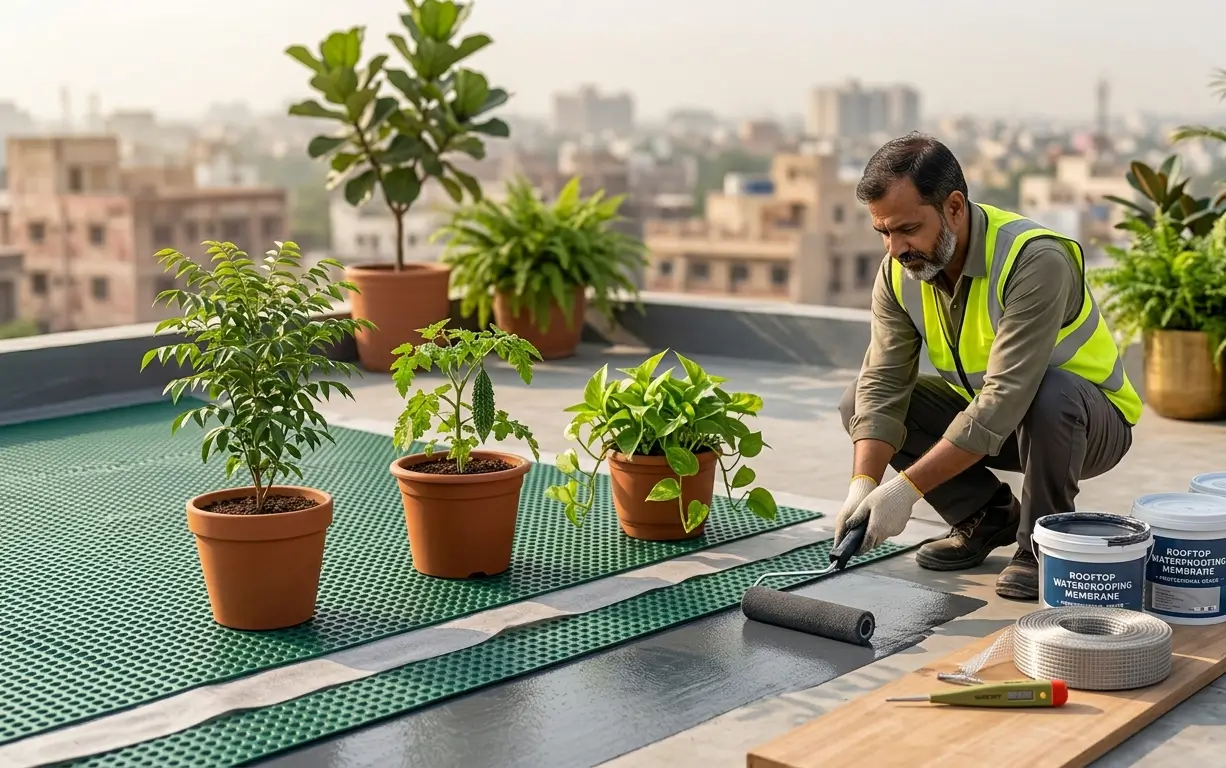
A terrace garden is a great way to bring nature closer to your home. You can grow vegetables, colourful flowers, herbs, and small decorative plants without needing a backyard. Even a small rooftop can become a peaceful green space where you can spend time with your family. Indian weather brings heavy monsoon rains, strong sunlight, and changing temperatures. These conditions can affect your rooftop over time. Water from plant pots, regular watering, and rain can enter small cracks and damage the roof if you do not protect it properly.
Why Does Your Rooftop Need Waterproofing Before Starting a Terrace Garden?
Many homeowners focus on buying attractive pots, soil, and plants when planning a terrace garden. However, they often ignore the condition of the roof. Here are some important reasons to waterproof your rooftop before installing a garden.
1. Prevents Water Leakage
Water from regular plant watering and rainfall can collect on the rooftop. If the roof has cracks or damaged waterproofing, water may enter the concrete structure. You may notice damp patches, peeling paint, or water stains on the ceiling below. Proper waterproofing protects your home from these issues.
2. Protects the Roof Structure
Continuous moisture can damage roof finishes and contribute to the deterioration of concrete over time. Waterproofing creates a protective layer that reduces water penetration. It also helps protect the roof from repeated exposure to rain and moisture.
3. Supports Healthy Gardening
A terrace garden needs regular watering. Some plants also require larger pots and deeper growing beds. Without proper waterproofing and drainage, excess water can collect around the growing areas. A well-planned rooftop protects the building while allowing you to maintain your plants comfortably.
4. Reduces Future Repair Expenses
Ignoring minor leaks can result in costly repairs down the road. You may need to repair damaged plaster, repaint ceilings, or fix affected roof areas. Waterproofing before installing your terrace garden can help reduce the chances of these problems.
How to Waterproof Your Rooftop for a Terrace Garden
Rooftop waterproofing requires proper planning. The right method depends on the existing roof condition, construction type, and gardening design. Follow these important steps with the help of a qualified waterproofing professional.
Step 1: Inspect Your Rooftop Carefully
This is one of the most important steps. Large planters, wet soil, water storage containers, and people can add considerable weight to a rooftop. Before installing heavy garden beds or adding large quantities of soil, consult a qualified structural engineer. The engineer can assess whether your roof can safely support the proposed garden. If a roof looks strong, that doesn’t mean it can hold heavy planters.
Step 2: Clean the Roof Surface
The waterproofing professional should prepare the roof surface before applying any waterproofing material. Dust, loose concrete, old paint, and dirt can affect how well a waterproofing coating sticks to the surface. The professional may use suitable cleaning equipment and remove damaged materials. They should also repair cracks and other surface defects using appropriate methods. A clean and properly prepared surface helps create a more reliable waterproofing system.
Step 3: Check Roof Slope and Drainage
Good drainage plays an important role in rooftop gardening. Your roof should allow rainwater and excess watering to flow towards the drainage outlets. Flat areas where water collects can create long-term moisture problems. Ask a professional to check the roof slope and drainage arrangement. Make sure the drainage outlets remain accessible after you install pots, planters, and other garden features.
Step 4: Choose the Right Waterproofing Method
Different rooftops need different waterproofing solutions. Your contractor should recommend a suitable system after checking the roof condition. Some common waterproofing methods include:
- Liquid Waterproofing Membrane: This method uses a liquid coating that forms a continuous waterproof layer after curing. Contractors commonly use suitable liquid-applied products on terraces and other exposed surfaces.
- Cementitious Waterproofing: This method uses cement-based waterproofing materials. Contractors apply suitable products to prepared surfaces according to the manufacturer’s instructions.
- Bituminous Waterproofing Membrane: This method uses bitumen-based materials to create a waterproof layer. Contractors may use it in suitable roof applications.
- Polyurethane Waterproofing: Polyurethane coatings can create flexible waterproof layers. Their suitability depends on the roof surface, exposure conditions, and product specifications.
Do not select a waterproofing material only because it costs less. Ask the contractor about its suitability for rooftop exposure, expected maintenance, and compatibility with the planned terrace garden.
Step 5: Protect the Waterproofing Layer
This step becomes especially important when you plan to install a terrace garden. A waterproofing membrane can suffer damage if you place heavy pots, sharp objects, or garden materials directly on it. You may need a suitable protective layer above the waterproofing system. Depending on the design, this can include protection boards, drainage layers, or other compatible materials.
A root barrier may also be necessary if you plan to install permanent planting beds. It helps protect the waterproofing system from aggressive plant roots. Ask your waterproofing contractor to design these layers as part of the complete terrace garden system.
Step 6: Test the Waterproofing Work
After completing the waterproofing work, arrange an appropriate inspection and water test. A professional may conduct a controlled ponding test if the roof design and waterproofing system allow it. This helps check whether water enters the structure. Follow the manufacturer’s curing instructions before testing or placing garden materials on the surface. Do not start terrace gardening until the professional confirms that the waterproofing system has passed the required checks.
Important Things to Consider Before Starting a Terrace Garden
Waterproofing alone does not make every rooftop suitable for a terrace garden. You should also consider the following factors.
1. Check the Roof’s Weight-Bearing Capacity
Large planters, wet soil, water storage containers, and people can add considerable weight to a rooftop. Before installing heavy garden beds or adding large quantities of soil, consult a qualified structural engineer. The engineer can assess whether your roof can safely support the proposed garden. Never assume that a roof can support heavy planters simply because it looks strong.
2. Choose Suitable Pots and Planters
Start with manageable containers instead of filling the entire rooftop with heavy garden beds. You can use suitable lightweight planters and containers. However, remember that wet soil and water inside the pots add weight. Place containers according to the approved garden layout. Avoid blocking drainage outlets or placing heavy loads in areas without professional approval.
3. Arrange Proper Water Drainage
Every plant needs water, but excess water should not remain on the rooftop. Use pots with suitable drainage holes. Arrange trays or other suitable collection systems to manage excess water without allowing it to spread across the terrace. Keep roof drainage outlets clean and accessible, especially during the monsoon season.
4. Select Plants According to Your Roof Conditions
Select plants based on the local climate, available space, and sunlight levels. For Indian terrace gardens, you can consider options such as tulsi, mint, coriander, chilli, spinach, and marigold. Start with a few plants and understand their water and sunlight requirements before expanding your garden.
Critical Waterproofing Mistakes That Lead to Roof Leaks
Many terrace garden problems begin with poor planning. Avoid these mistakes to protect your home.
- Ignoring Existing Leakage: Do not install waterproofing over unresolved leakage problems. Find the source and repair the damaged areas first.
- Choosing Cheap Waterproofing Materials: Low prices should not become the only deciding factor. Check product quality, suitability, and manufacturer instructions before selecting a system.
- Blocking Drainage Outlets: Pots and planters should never prevent rainwater from reaching roof drains. Blocked outlets can cause water accumulation.
- Ignoring Root Protection: Permanent planting beds may need a suitable root barrier. Discuss this requirement with your contractor before installing the garden.
- Overloading the Roof: Heavy soil beds, water tanks, and large planters can create structural risks. Get professional approval before adding substantial weight.
How Much Does Rooftop Waterproofing Cost in India?
The cost of terrace waterproofing depends on several factors. These include the roof area, existing surface condition, waterproofing method, and labour charges. A roof that needs crack repairs and extensive surface preparation may cost more than a roof with a relatively sound surface.
The type of waterproofing material also affects the total cost. Request a formal estimate that covers the following before engaging a contractor:
- Surface preparation and crack repairs.
- Waterproofing material and application.
- Protective and drainage layers where required.
- Labour and testing charges.
- Warranty terms and maintenance requirements.
Compare quotations from different contractors, but do not select a service based only on the lowest price.
How to Maintain a Waterproof Rooftop Terrace Garden
Waterproofing needs regular attention even after professional installation.
Check your rooftop before and after the monsoon season. Look for cracks, damaged surfaces, and areas where water collects.
- Clean drainage outlets regularly. Remove dry leaves, soil, and other materials that may block the flow of water.
- Check the areas around planters and water pipes for signs of leakage. Make quick arrangements for an inspection if you see moist areas on the ceiling beneath.
- Avoid drilling into the waterproofed surface to install garden accessories unless a professional approves and properly seals the work.
- Regular inspection helps you identify small problems before they become expensive repairs.
Conclusion
A terrace garden can make your home greener and more enjoyable. However, you should prepare your rooftop properly before bringing in plants, pots, and soil. Remember that a successful terrace garden needs more than good plants and healthy soil. It also needs a safe roof, proper water management, and regular maintenance. Plan the work carefully and take professional advice wherever necessary. This will help you create a beautiful rooftop garden while protecting your home from water leakage and structural problems.