
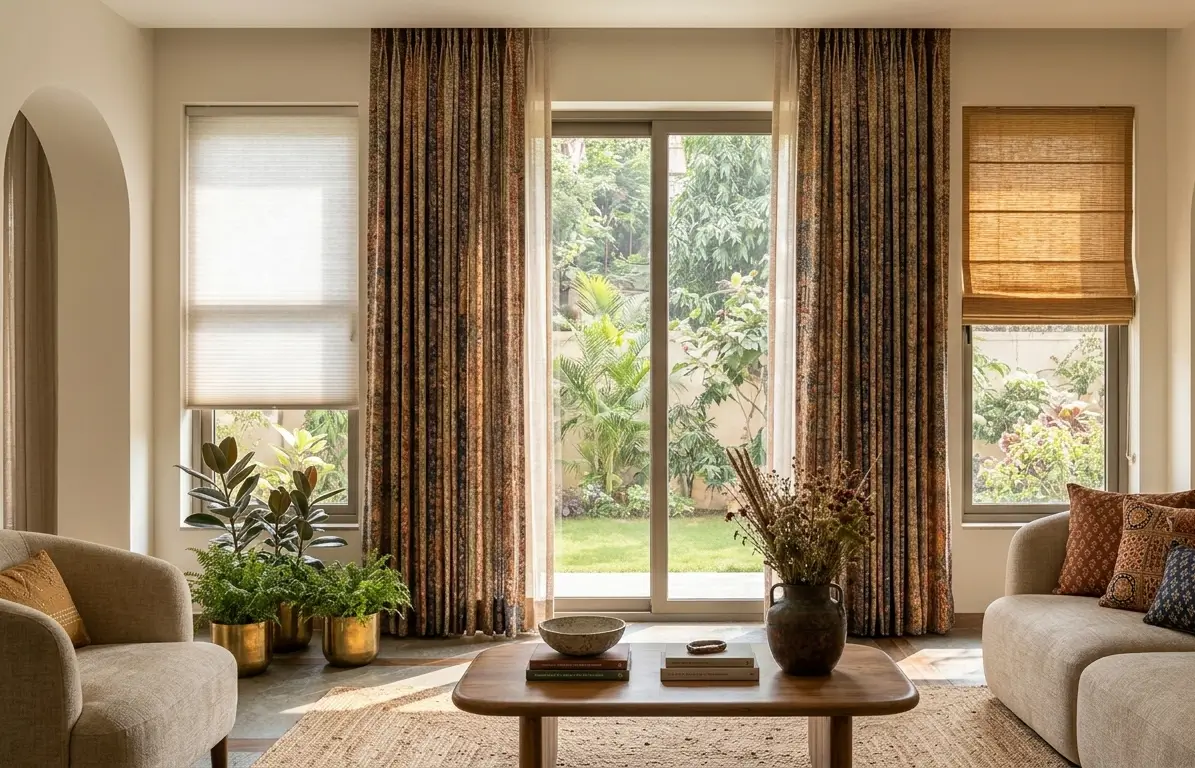
Have you ever entered a room and noticed how its curtains, blinds, or other window coverings change the entire look? A simple window can become an attractive part of your home with the right design. These coverings also help control sunlight, maintain privacy, and make indoor spaces more comfortable.
You may have heard the term window treatment while shopping for curtains or planning your home interiors. But what does it actually mean?
A window treatment refers to any covering, decoration, or fitting that you add to a window. It can include curtains, blinds, shades, shutters, valances, and other decorative elements. Some options focus on appearance, while others help manage light, privacy and heat.
What Does Window Treatment Mean?
A window treatment is a practical or decorative covering that you install on or around a window. It can cover the entire window or only a part of it. For example, curtains that hang from a rod are a common window treatment. Roller blinds, wooden blinds and Roman shades also fall into this category.
People use window treatments for several reasons. They may want to stop outsiders from looking inside, reduce harsh sunlight, or improve the appearance of a room. In Indian homes, window treatments also help manage strong afternoon sunlight and provide privacy in rooms that face busy streets or neighbouring buildings.
Why Are Window Treatments Important?
Window treatments do more than make a room look attractive. The right choice can improve comfort and make everyday life easier.
1. They Provide Privacy
Curtains and blinds are mostly used for privacy. A covering can block people from gazing into your bedroom window if it faces another building or busy road. You can choose blackout curtains for bedrooms or blinds that let you adjust how much of the window you cover. Sheer curtains offer a softer look, but they may not provide enough privacy at night when you switch on the lights.
2. They Help Control Sunlight
Direct sunlight can make a room uncomfortable, especially during hot Indian summers. It can also create glare on television and computer screens. Window treatments help you control the amount of light that enters a room. Sheer curtains soften incoming daylight, while blackout curtains block most outside light when you close them.
3. They Improve Room Appearance
Windows take up a noticeable part of many rooms. A suitable curtain or blind can make the space look more complete. For example, floor-length curtains can create a neat look in a living room. Simple roller blinds may suit a modern study area or a compact bedroom.
4. They Can Improve Indoor Comfort
Some window coverings help reduce direct heat from sunlight. This can make a room feel more comfortable during the day. However, the result depends on the fabric, colour, design, window direction, and installation. No window treatment can replace proper ventilation or suitable insulation.
5. They Offer Some Protection From Dust and Outside Views
Curtains and blinds can separate your room from the outside. They can also reduce direct sunlight on furniture and other items. Due to dust buildup, fabric curtains and blinds should be cleaned regularly.
What Are the Different Types of Window Treatments?
You can find several types of window treatments in the market. Each option has a different appearance and purpose. Let’s understand the most common choices.
1. Curtains and Drapes
Curtains are among the most common window treatments in Indian homes. They hang from a curtain rod or track and come in different fabrics, colours, lengths, and patterns. You can choose light curtains for everyday use or thicker curtains when you need more privacy and light control. People often use the terms curtains and drapes interchangeably. However, drapes usually refer to heavier and more formal window coverings.
Best for: Living rooms, bedrooms, dining areas, and other spaces where you want a soft decorative look.
2. Roller Blinds
A single piece of fabric that rolls up and down is used in roller blinds. You can raise them to open the window or lower them to cover the glass. They offer a simple appearance and work well in homes that follow a modern interior style. You can find light-filtering and blackout versions.
Best for: Bedrooms, home offices, study rooms, and modern apartments.
3. Venetian Blinds
Venetian blinds contain horizontal slats that you can tilt to control light and privacy. You can also raise them to open the window. Manufacturers make these blinds from materials such as aluminium, wood, and other suitable materials. Their adjustable design gives you more control over incoming light than many basic curtains.
Best for: Study rooms, offices, kitchens and rooms where you want adjustable light control.
4. Roman Shades
Roman shades use fabric that folds into neat horizontal sections when you raise them. When you lower them, the fabric covers the window. They combine the soft appearance of curtains with a compact shade design.
Best for: Bedrooms, living rooms, and spaces where you want a clean fabric finish.
5. Sheer Curtains
Sheer curtains use lightweight and partly transparent fabric. They enable natural light to penetrate while at the same time reducing the intensity of the light. Many people combine sheer curtains with thicker curtains. During the day, they can close the sheer layer and keep the heavier curtains open. Remember that sheer curtains usually offer limited privacy at night.
Best for: Living rooms, balconies, and windows where you want soft natural light.
6. Blackout Curtains
Blackout curtains use specially designed fabric that blocks most incoming light when you close them. They can help create a darker room for sleeping or watching films. Their performance depends on the fabric and how closely the curtains cover the window. Light may still enter through gaps around the edges.
Best for: Bedrooms, media rooms, and rooms that receive strong sunlight.
7. Window Shutters
Solid or movable panels that cover a window are called window shutters. Depending on the design, you can fully open them or modify their panels. They can offer privacy and light control in addition to a structured appearance. Before selecting them, you should, however, verify the price, material, and installation specifications.
Best for: Homes that suit a more permanent and structured window design.
8. Valances
A valance is a short decorative fabric covering that sits across the top of a window. It can hide the curtain rod or track and add a finishing touch. People often combine valances with curtains. They mainly serve a decorative purpose and do not provide full privacy or sunlight control.
Best for: Traditional interiors and windows where you want extra decoration.
Window Treatment Ideas for Different Rooms
The right window treatment depends on how you use each room. A bedroom needs different light control from a kitchen or living room.
| Room | Suitable window treatment | Why it works |
| Living room | Curtains with sheer layers | Offers flexible light and privacy |
| Bedroom | Blackout curtains or suitable shades | Helps create a darker sleeping space |
| Kitchen | Easy-to-clean blinds or short curtains | Keeps window coverings practical |
| Study room | Roller or Venetian blinds | Helps manage glare |
| Balcony | Weather-suitable blinds or curtains | Offers privacy and some shade |
1. Living Room Window Treatment Ideas
Your living room is often the main space where you welcome guests and spend time with family. Choose curtains that match your sofa, wall colour, and furniture. A combination of sheer and thicker curtains gives you more control over sunlight and privacy. If your living room has a large window, check the curtain length and width before buying fabric.
2. Bedroom Window Treatment Ideas
Bedrooms need privacy and comfortable lighting. Blackout curtains can help people who prefer a darker room while sleeping. You can also use Roman shades or roller blinds if you want a simple design. Check whether the covering blocks enough light for your needs before purchasing it.
3. Kitchen Window Treatment Ideas
Kitchen windows require useful covers that are simple to clean. Areas close to cooking surfaces might not be suitable for heavy fabric curtains. For windows that are far from the washbasin and stove, you might want to think about short curtains or appropriate coverings. Fabric and hanging items should always be kept away from hot cooking appliances and open flames.
How to Choose the Right Window Treatment for Your Home
You should consider more than colour and appearance before buying window coverings. A beautiful design may not work well if it does not suit your room or daily needs.
1. Check Your Main Requirement
First, decide why you need a window treatment. Do you want more privacy, less sunlight, or simply a better-looking room? If privacy matters most, choose a covering that suits the window’s position. If you want natural light, consider sheer curtains or adjustable blinds.
2. Measure the Window Properly
Measure the window before ordering curtains, blinds, or shades. Check the width and height, and decide where you want to install the rod or track. Do not rely on rough estimates. Incorrect measurements can leave gaps or make curtains look too short.
What should you measure?
- Window width and height.
- Space above the window for the curtain rod or track.
- Distance from the window to nearby furniture.
- Space needed for curtains to open and close.
3. Select the Right Fabric
Choose fabric according to the room and your cleaning preferences. Cotton and other lightweight fabrics can suit everyday curtains, while thicker fabrics may help block more light. Check the washing instructions before buying. Some materials need special care.
4. Match the Interior Style
The style of your window treatment has to be harmoniously integrated with the overall aesthetic of your room. Patterns may give an additional layer of visual appeal, but neutral colours are able to complement a wide range of interior design styles. The equilibrium of your area may be improved by the addition of simple curtains, particularly if it already features patterned walls or striking furnishings.
5. Consider Maintenance
Some blinds have narrow spaces where dust can collect. Fabric curtains may need regular washing or cleaning. Think about how much time you can spend on maintenance. Choose an option that fits your routine.
Common Window Treatment Mistakes to Avoid
A few simple mistakes can affect the appearance and usefulness of your window coverings.
- Ignoring measurements: Curtains with incorrect measurements may have gaps or look uneven. Measure before ordering.
- Choosing style over function: A decorative curtain may not provide enough privacy or light control. Think about your main requirement first.
- Using heavy curtains in every room: Thick curtains may not suit every window. Choose fabric according to the room’s light and ventilation needs.
- Forgetting regular cleaning: Dust can collect on curtains and blinds. Follow the manufacturer’s cleaning instructions.
- Ignoring the curtain rod or track: A suitable rod or track supports the window treatment and affects its overall appearance. Check its strength and fitting requirements.
Conclusion
Window coverings and decorations enhance window attractiveness and function. These include curtains, blinds, Roman shades, shutters, transparent curtains, and others. The right choice can provide privacy, help control sunlight, and make your home feel more comfortable. However, you should select a design according to your room size, budget, and daily needs.
If you are planning to update your home interiors, start by checking each window. Decide how much light and privacy you need, measure the space, and choose a suitable material. A simple and practical window treatment can make a noticeable difference without requiring a complete room makeover.