
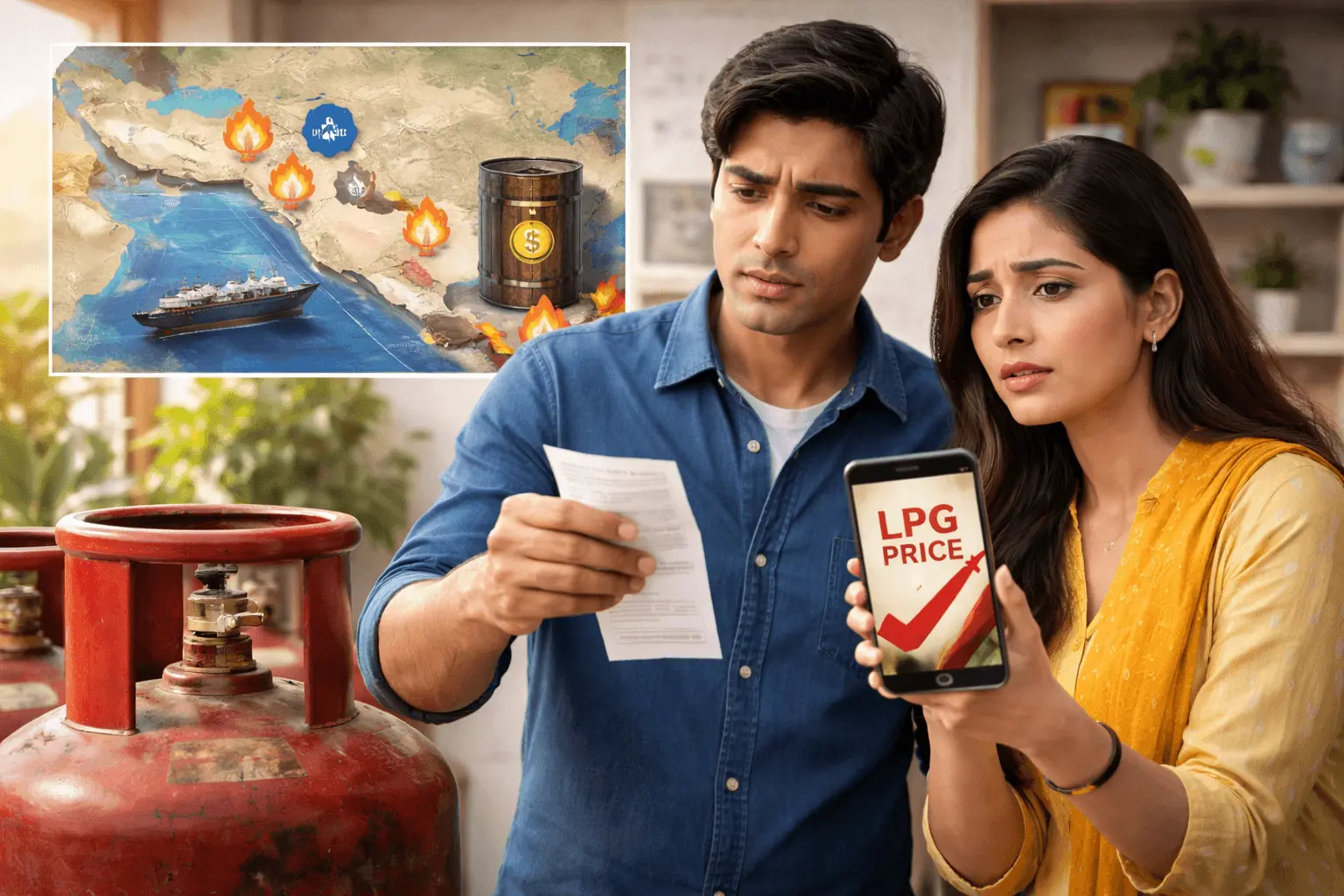
Cooking gas is an essential commodity in nearly all Indian households. Most families rely on an LPG gas cylinder to cook breakfast, lunch, and dinner as well as for morning tea and dinner preparation. Due to this, the household budgets of the country are directly influenced by the LPG gas price.
Over the past few months, the price of gas cylinders have been seen by many people to change. The world situation, and the situation in the Middle East, in particular, with Iran, and tensions have raised the issue of fuel supply and its increase.
Gaining knowledge on the reasons and ways that the global events affect the LPG gas price can assist households to plan better and expend the money prudently.
This blog helps to understand LPG and the reasons why a change in LPG gas price is an issue, the current scenario caused by the Iran conflict, challenges encountered by the Indian consumers, and viable solutions to mitigate the effect.
Table of Contents
What is LPG, and why is it important in India?
LPG means Liquefied Petroleum Gas. It is a combination of propane and butane gases that are kept under pressure in cylinders. Upon release, the gas burns readily, and a clean flame that can be used to cook is generated.
Millions of Indian families like to use LPG since it is cleaner compared to the conventional energy of wood, coal, or kerosene.
LPG cooking has a variety of benefits. It creates fewer flames, cooks more quickly, and gives greater control over the fire. This renders it easy and uncomplicated to cook every day.
In India, the use of LPG has been growing at a very high rate over the last 10 years. The use of LPG by rural households has also been promoted through government initiatives, which advise them to abandon traditional fuels.
Because of its importance in daily life, any change in the LPG gas price quickly becomes a topic of discussion among consumers.
Learning about the LPG Gas Price in India
The LPG gas price is the price that consumers pay when they fill up their cooking gas cylinder. The common gas cylinder used in most Indian households is the 14.2 kg LPG gas cylinder used to cook.
However, LPG gas prices are not fixed permanently. They may change depending on several economic and global factors.
These factors together determine the final LPG gas price consumers pay.
| Factor | Impact on LPG Gas Price |
| Global crude oil prices | Higher oil prices increase LPG cost |
| Currency exchange rate | A weaker rupee makes imports expensive |
| Transportation expenses | Delivery costs influence final price |
| Government policies | Subsidies or reforms affect pricing |
| Distribution network costs | Storage and logistics add to the price |
Because India imports a significant portion of its LPG, global market changes often influence domestic pricing.
Types of LPG Gas Cylinders Used in India
Different types of LPG cylinders are available depending on usage.
| Cylinder Type | Typical Usage |
| 14.2 kg Domestic Cylinder | Used in most households |
| 5 kg Small Cylinder | Used in small homes or for travel |
| 19 kg Commercial Cylinder | Used in hotels, restaurants, and businesses |
Commercial cylinders usually cost more because they do not receive the same price support as domestic cylinders.
Most Indian families depend on the 14.2 kg cylinder, which usually lasts between 25 and 45 days, depending on cooking habits.
Current LPG Gas Price Situation Due to the Iran Conflict
Political conflicts in the global energy markets usually attract a lot of reactions. In the recent past, oil and gas transportation routes in the Middle East have been influenced by tensions that surrounded Iran.
The Strait of Hormuz is one of the most crucial pathways to fuel supply in the world. This small sea route is the major passage for oil and gas deliveries in the world. In the event that tensions increase in this region, the world fuel markets will become volatile.
Middle Eastern countries supply India with a high amount of LPG. Due to this reliance, any disturbances in the area have the potential to affect the LPG supply and price in India.
The energy prices in the world went up when the war triggered uncertainty in supply routes. This increase in international prices ultimately had an impact on the LPG gas price in India.
Some city consumers observed a rise in the prices of cylinders. Simultaneously, individuals began to fear potential scarcity, and it generated panic reservations in some regions.
Even though the supply system has not stopped, the scenario brings out the impacts of international happenings on daily household costs.
Problems Faced by Indian Consumers
The new world order has posed several issues for Indian families.
• Increase in LPG Gas Price
The highest problem facing most of the families is the escalating price of the LPG gas cylinder. The monthly budget of middle-class and lower-income families will be impacted even in the case of a moderate rise. Kitchen costs consist of a big component of the cost of cooking gas. The rise in LPG prices usually makes families have to cut back on expenditure on other needs.
• Fear of Shortage of Gas Cylinders
Consumers are usually scared of LPG supplies due to the news coverage of international conflicts. Consequently, individuals can make attempts to reserve cylinders before they tend to do so. This behaviour of panic may temporarily cause demand to rise and put strain on distribution systems.
• Impact on Small Businesses
LPG cylinders are also crucial to small food ventures such as street vendors, dhabas, and restaurants. Another thing that escalates their operations is the increasing prices of gas.
Numerous companies ultimately raise food costs to meet rising fuel costs, which also impacts consumers.
• Household Budget Pressure
High-frequency pricing increases may be a source of financial stress to the families whose incomes do not rise with the price. Cooking gas is a prerequisite, and hence, households cannot cut their consumption easily.
Measures that Authorities have Taken to keep Supply
To continue the supply of LPG without hindrances, the supply system is usually taken under close watch by the authorities during international shocks.
The energy agencies and companies are closely related to ensure that there is sufficient LPG within the major cities and towns. Consumers have also been advised against panic booking cylinders. The booking of gas when needed will ensure that everyone is supplied with a constant supply.
LPG in India is also being imported by various countries. This diversified importation policy is useful in mitigating the effects of a supply breakdown in any given region.
Real-world Solutions to cutting down on the use of LPG Gas
Although the households are unable to influence the price of LPG gas, they can cut back on usage through efficient utilization habits.
• Cook with Covered Utensils
Putting pots during cooking will assist in preserving heat in a vessel. Food cooks more quickly, thereby saving on gas.
• Use the Right Burner Flame
A fire that burns outside the bottom of the utensil burns gas. The proper adjustment of the flame makes sure that it cooks efficiently.
• Clean Burners Regularly
Covered burners decrease the efficacy of flames. Frequent cleaning is the key to proper gas circulation and increased performance in the kitchen.
• Prepare Ingredients Before Cooking
Preparation of ingredients and cutting vegetables beforehand will save on wasted gas during cooking.
Such minor practices would lead to a decrease in the usage of LPG in the long run.
Future Prospect of LPG in India
Although there have been temporary changes in the prices of LPG gas in India, it is still one of the most significant cooking fuels in India.
The demand for LPG will also be on the increase as more households turn to cleaner cooking fuels. Meanwhile, the government and energy corporations are still trying to reinforce supply chains and diversification of fuel sources.
LPG will continue to be a stable cooking fuel for millions of Indian families with improved infrastructure and stable networks of distribution.
Summary
LPG gas price has become very significant in the lives of Indian families. The pricing of LPG in India can be affected by global forces like the global fuel price and the political strife in the world.
The unrest that was witnessed in the Middle East in the recent past, such as the Iran-related matters and the energy routes, has caused some short-term uncertainty in the world fuel markets.
Stability in the LPG distribution, however, is maintained through the distribution channel in India and diversified imports.
In the case of households, being informed, not panicking in booking, and following effective cooking methods is the best strategy. Minor modifications in everyday routines will allow a decrease in LPG consumption and control the costs of the kitchen more efficiently.
Read More: How I Started Saving Money from My Salary