
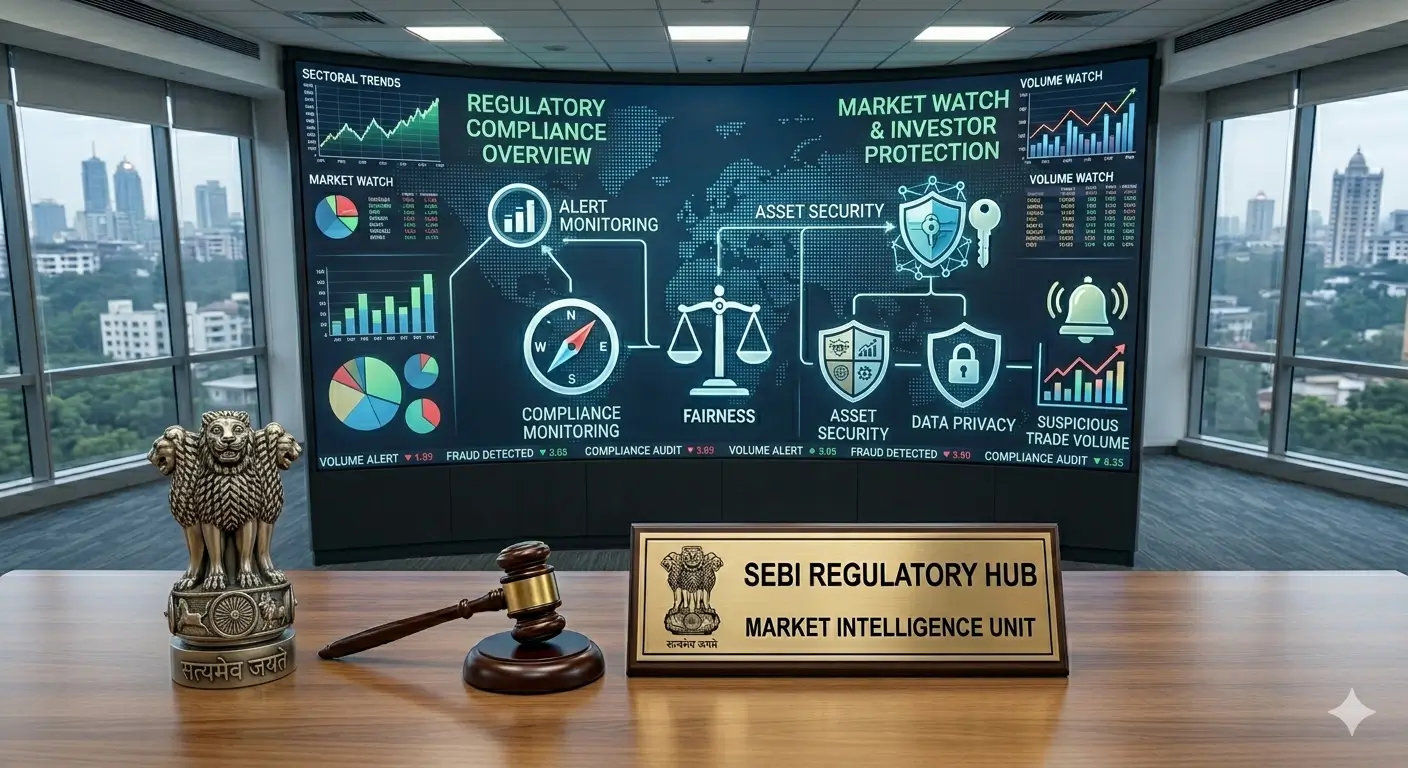
Trading at the stock market is akin to entering a busy bazaar with everybody screaming. It is sometimes difficult to know whom to trust or where to invest hard-earned money for an average Indian investor. This is exactly where the Securities and Exchange Board of India, or SEBI, comes into the picture. SEBI ensures that the big players don’t bully the small ones and that every transaction follows a set path in the world of finance.
If you have ever wondered why your broker asks for so many documents or why certain stocks get suspended suddenly, you are seeing SEBI in action. Their main job is to keep the market clean and transparent so that people like us feel safe putting our money into shares or mutual funds. Understanding these “rules of the game” isn’t just for experts because it directly affects your bank balance and your financial future.
Table of Contents
Why SEBI Matters to the Common Man
Many people think SEBI only deals with big billionaires or massive corporations. That is a huge misconception because their most important work is protecting the “retail investor” which means regular people investing small amounts. In the past the Indian market saw several scams where people lost their life savings due to price manipulation. SEBI was strengthened to stop these practices and give the public a fair chance at wealth creation.
When you buy a stock today you can be fairly sure that the company has shared its real financial data with the public. SEBI mandates that companies must disclose their profits and losses every quarter without hiding any major debt. This transparency is the backbone of the market. Without these rules the stock market would just be a place for gambling rather than a legitimate way to grow your wealth over time.
The Core Functions of the Market Regulator
SEBI operates with three main objectives in mind. First they protect the interests of investors. Second they promote the development of the securities market. Third they regulate the business of the stock exchanges. This triple role makes them one of the most powerful institutions in India. They don’t just sit in an office but actively monitor every single trade that happens on the NSE and BSE.
The push towards digitalization has been one of their greatest successes. The elderly investors may be reminded of the physical share certificates that could be lost or forged easily. Demand accounts became obligatory under SEBI, which altered all that. Your shares are now safely kept in electronic format, and the chances of fraud are significantly reduced. They also make sure that your broker cannot spend your money to pursue his or her own personal business, as it was a huge issue in the previous decades.
A Breakdown of Market Participants
To understand the rules you need to know who SEBI is watching. The market isn’t just buyers and sellers but a whole ecosystem of intermediaries.
| Participant | Role in the Market | How SEBI Regulates Them |
| Stock Brokers | They execute your buy and sell orders | Must register with SEBI and maintain a minimum net worth |
| Listed Companies | Businesses that issue shares to the public | Must follow strict disclosure norms and audit rules |
| Mutual Funds | Professional managers who pool public money | Subject to strict investment limits and fee caps |
| Foreign Investors | International funds investing in India | Monitored to prevent sudden market volatility |
Real-Life Regulations That Guard Your Investments
SEBI has come up with a number of specific actions that serve as safety nets to investors. These are not mere theoretical policies but processes that are in action and come into play when something goes wrong.
- Circuit Breakers and Price Bands
This rule stops a stock from crashing or jumping too much in a single day. If a stock starts falling 10% or 20% the trading is halted for a while. This gives investors a “cooling off” period to think rationally instead of selling in a panic. It prevents big players from crashing a stock just to buy it for cheap later. - T+1 Settlement Cycle
India is one of the few countries that moved to a very fast settlement system. When you sell a stock the money and shares are settled within one working day. This reduces the risk of the other party failing to pay or deliver. It keeps the system liquid and ensures that your money isn’t stuck in “transit” for weeks. - The SCORES Platform
This is a grievance redressal system where any investor can file a complaint against a company or a broker. If your broker is not releasing your funds or a company is not paying dividends you can go to SEBI directly. The regulator tracks these complaints and ensures they are resolved within a specific timeframe. - Insider Trading Prohibitions
Imagine if a CEO knew their company was going to report a huge loss and sold all their shares before telling the public. That would be unfair. SEBI has very strict rules against using “unpublished price-sensitive information.” They monitor the trades of company directors and large shareholders to ensure no one is cheating the system.
How SEBI Handles Market Scams
Over the years, the methods used by scammers have changed. Earlier, it was about physical fraud, but now it is often about “pump and dump” schemes on social media. You might see a Telegram group or a YouTube channel shouting about a “multibagger” stock that will double in a week. SEBI actively tracks these influencers and groups. They have the power to freeze bank accounts and bar people from the market if they are found to be misleading the public.
They also keep a close eye on “Shell Companies.” These are firms that exist only on paper to move black money or manipulate stock prices. SEBI periodically identifies such companies and delists them from the exchange to protect unsuspecting investors from buying junk shares. Their enforcement wing can conduct raids and impose heavy fines that sometimes run into hundreds of crores.
Expert Insights: Staying Safe in the Market
Even with SEBI watching, you must take personal responsibility for your money. The regulator provides the fence, but you have to watch your own steps inside the garden. Most problems happen when investors get greedy and ignore the red flags that SEBI warns about.
Useful Tips for Indian Investors
- Verify the Registration: Never give your money to a “sub-broker” or “investment advisor” who is not SEBI-registered. You can check their registration number on the official SEBI website in seconds.
- Read the DRHP: When an IPO comes out the company must file a Draft Red Herring Prospectus. This is a massive document that SEBI vets. While it is long you should at least read the “Risk Factors” section to see what could go wrong.
- Update Your KYC: SEBI has made Know Your Customer (KYC) rules very strict. Ensure your PAN and Aadhaar are linked to your trading account to avoid your account getting frozen during a market rally.
- Avoid Guaranteed Returns: SEBI rules strictly forbid any registered entity from promising “guaranteed” or “assured” returns in the stock market. If someone promises 10% monthly profit they are likely a fraudster.
- Monitor Your SMS Alerts: Every time a trade happens in your account the exchange sends an SMS. SEBI mandated this so that you know instantly if someone else is using your account without your permission.
The Evolution of Mutual Funds Under SEBI
Mutual funds have become the favorite investment tool for the Indian middle class through SIPs. SEBI has completely revamped this sector to make it more investor-friendly. For example, they banned “Entry Loads” which were high commissions that investors had to pay while joining a fund. This single move saved billions of rupees for the common people.
They also introduced the “Categorization of Mutual Funds.” Earlier fund houses had many confusing schemes with similar names. SEBI forced them to clearly define each fund so that a “Large Cap” fund only invests in large companies. This clarity helps you build a proper portfolio without getting any nasty surprises during a market correction.
Cost Analysis: Impact of SEBI Rules on Your Returns
| Feature | Before SEBI Intervention | After SEBI Intervention |
| Mutual Fund Commissions | High upfront charges (Entry Load) | Zero Entry Load / Lower Expense Ratios |
| Brokerage Transparency | Hidden charges and high spreads | Transparent digital contract notes |
| Direct Plans | Not easily available to everyone | Mandatory “Direct” options with lower fees |
| Grievance Resolution | Could take years in civil courts | Resolution through SCORES in weeks/months |
Conclusion
In summary, SEBI’s role is not just about making laws but about building trust. When you see your SIP growing or your shares gaining value remember that the stability of that platform is maintained by a regulator working 24/7 behind the scenes. Stay cautious and stay curious and always trade within the lines drawn by the regulator. This is the only way to ensure that your financial journey is a marathon and not a short-lived sprint that ends in a crash.
Read More: Mastering Technical Analysis in the Indian Trading Market
The content on Probusinessline.com is for informational purposes only and does not constitute professional advice. Please verify information independently and consult a qualified professional before making any decisions. We are not responsible for any actions taken based on this information.