
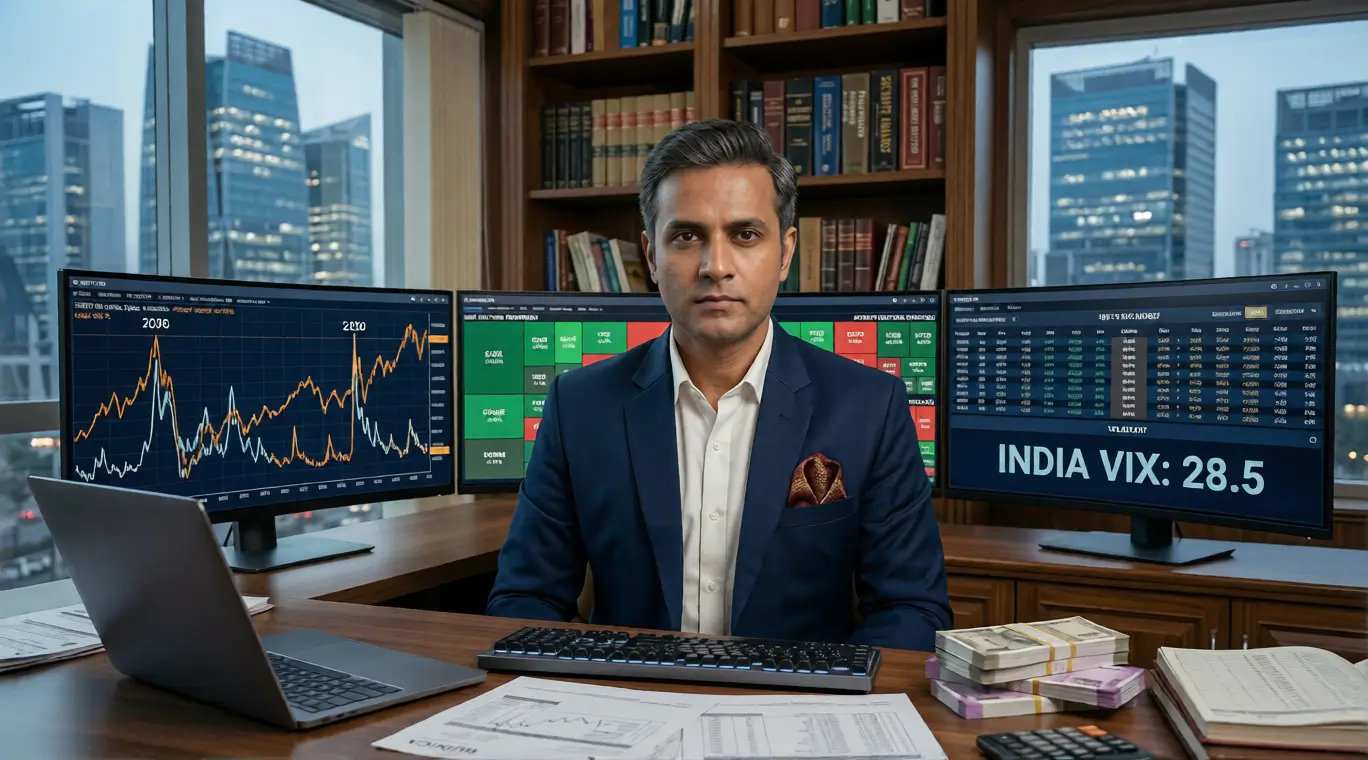
The stock market has never been fully reliable, and anyone who has traded in stocks for even a short time knows that prices can change a lot in a single trading session. What sets experienced investors apart from new ones is not their ability to avoid these changes, but their willingness to learn more about them. That’s exactly what the India Vix does: it gives a number value to the amount of market volatility that is expected over the next 30 days. It is found by looking at the bid and ask prices for out-of-the-money NIFTY options contracts on the National Stock Exchange. The number is usually between 15 and 35, and buyers are usually happy with the situation if it stays below 20. But since late 2021, more retail activity in the options section has pushed the standard up more than once. This suggests that the market may have entered a phase where slightly higher volatility is now the rule rather than the exception.
The Emotional Weight Behind Every Price Swing
There is a psychological side to volatility that can’t be fully captured by numbers alone. The sudden jump in the India Vix shows a general change in mood among thousands of market players who are now unsure about the future. Because of this emotional weight, stocks overshoot on the downside during panic selling and overshoot on the upside during wild rises. When the world banking system was in danger of failing in November 2008, the measure hit its all-time high of 92.5. As the world dealt with the start of a pandemic in March 2020, it went up again to 87. Investors are informed by those serious numbers that volatility is more than simply a technical idea covered in trade workshops. It is a living experience that, if one lacks a framework for understanding what the numbers actually suggest practically, can weaken trust and cause rash actions.
Different Players Read the Same Signal Differently
What makes the India Vix genuinely interesting is that the same reading can lead to completely opposite actions depending on who is looking at it. A day trader scanning stocks for quick opportunities might reduce position sizes when volatility climbs because the risk of sudden reversals increases significantly. Because high volatility raises option prices and increases the possible profit on well-timed moves, an options buyer may see the same situation as a “golden window.” Conversely, option buyers want calmer markets where premiums gradually drop in their favour without major price changes upsetting their stocks. Large institution fund managers also keep a close eye on this measure to decide whether to take advantage of fear-driven deals in growth-oriented stocks or move amounts toward safe sectors.
Turning Market Noise Into Meaningful Decisions
Thoughtful buyers see turbulence as a source of useful information rather than something to be afraid of. Checking the India Vix alongside regular portfolio reviews helps put daily price movements into proper context. A five percent drop in a particular stock feels very different when the broader market is calm compared to when the volatility index is signaling widespread anxiety. Mobile trading platforms now make it simple for anyone to access real-time volatility data and use it alongside their own research on individual stocks. The investors who consistently perform well over long periods are rarely the ones who avoid volatile markets altogether. They are the ones who develop the discipline to sit with discomfort, interpret available data thoughtfully, and resist the urge to make hasty decisions based purely on how frightening a particular trading day happens to feel.
