
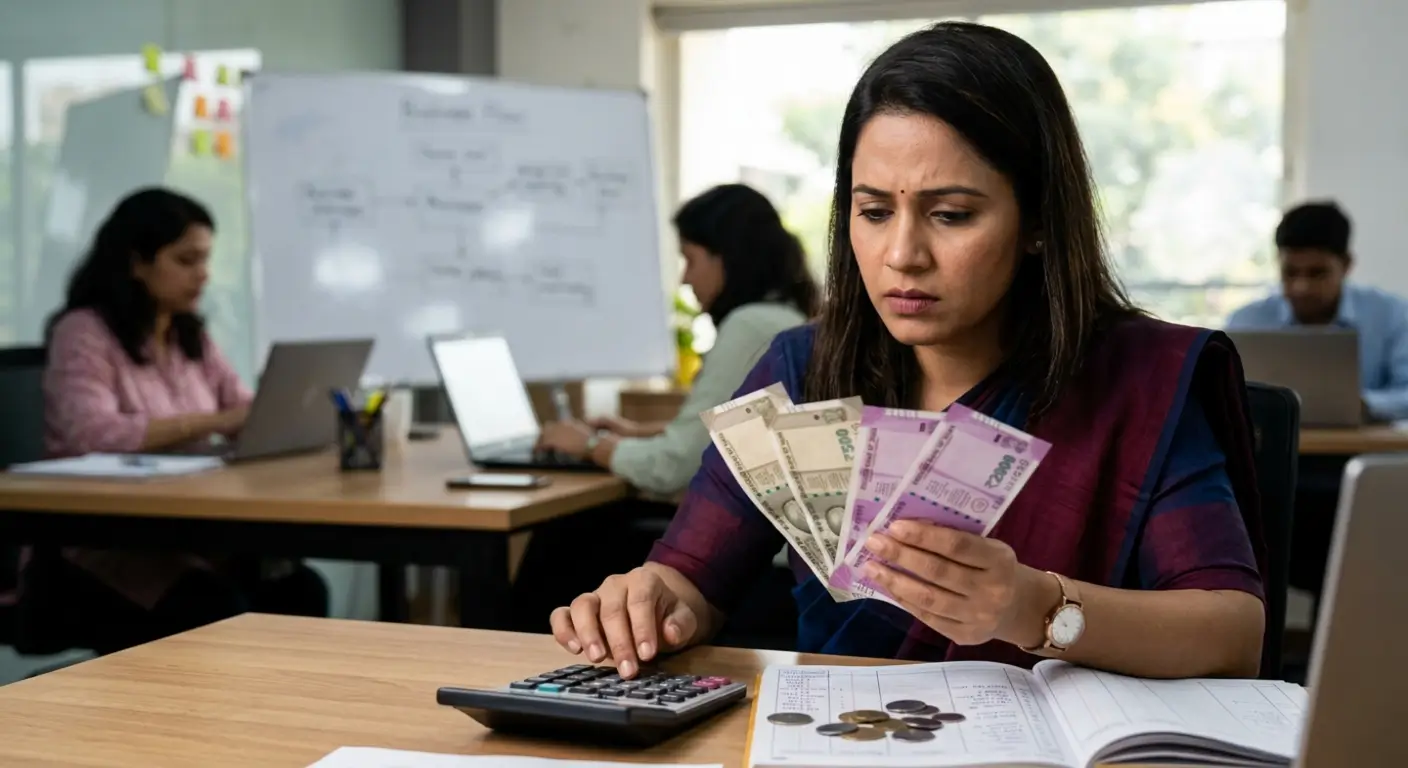
Running a business in India is a rollercoaster ride. One day, you are celebrating a huge order from a first-time client. The following day, you are banging your head on the fact that there is not enough money in the bank to cover the electricity bill or the salaries of your staff. It is the standard trap of a business with zero cash, which is profitable. This is the nightmare of many entrepreneurs in cities such as Delhi, Mumbai, or Bengaluru. You have great numbers on your laptop screen. Your CA informs you that you have made a profit during this quarter. However, by looking at your real bank balance, it tells a different story.
The difference between what you are selling and the actual liquid cash is what we term a cash flow problem. Otherwise, you can fix this gap within a short time because it will eventually suffocate your business.
Table of Contents
The Difference Between Profit and Cash
The biggest mistake many small business owners make is confusing profit with cash. You might sell goods worth 5 lakh rupees today. On paper, that looks like a huge win. However, if that customer has taken those goods on a 90-day credit period, you don’t actually have that money yet. At the same time, your suppliers insist on payment. The monthly rent on your office is due on the 1st of each month.
Your employees do not have 3 months to wait to get their paychecks. This is why even when businesses are busy receiving orders, they still fail. Profit is an accounting issue, but cash is the oil that makes the engine run. A lack of a continuous inflow of inward cash will put your business into a stall, no matter how many orders you may have in your pipeline.
Why Indian Businesses Struggle With Cash Flow
The Indian market has a strong culture of “Udhaar” or credit culture. In other cases, they even postpone to the agreed-upon dates. This forms a colossal congestion point. The other problem is ineffective inventory management. Many retail and wholesale business owners dump their capital into buying extra stock because they got a small discount from a distributor. Now that money is sitting on a shelf as boxes instead of being available in the bank.
You can not pay your GST and TDS using unsold units of inventory. High overheads also play a role. Most of the startups waste their money on fancy office interiors or costly marketing before they can even have a stable stream of revenue. These fixed costs consume your cash flow reserves at a rate that is higher than your ability to replenish them.
Signs Your Business Is Heading For Trouble
You need to be very observant about the warning signs before things get out of hand. If you find yourself constantly taking short-term high-interest loans to pay regular monthly bills, you are already in the danger zone. Another sign is when you start delaying payments to your own suppliers. This ruins your reputation in the market.
In India, word spreads fast in trade circles. Once your suppliers lose trust, they will stop giving you credit. This forces you to buy everything in cash which makes your liquidity problem even worse. You might also notice that you are spending more time managing “firefights” related to money rather than focusing on growing your sales. If you are constantly stressed about next week’s expenses it is time to change your strategy.
Practical Steps to Fix Your Cash Flow
It takes both discipline and shrewd negotiation to fix your cash flow. You cannot sit there and hope that things are going to get better. You must personally be able to control all the rupees entering and leaving your company.
Step 1: Improve Your Terms of Payment and Collection
You must stop being shy about asking for your own money. We often hesitate to follow up on payments in India because we fear it might spoil the relationship. But a client who doesn’t pay on time is not a healthy client for your growth. Start by asking for an advance payment before you begin any work or ship any goods. This process will cover your initial costs.
Set clear due dates on your invoices and send polite reminders a few days before the deadline. If a client is consistently late, you might need to stop offering them credit altogether. Offering a small discount for early payments can also work wonders to bring cash in faster.
Step 2: Spend Money with a lot of caution
Check your spending out every single paisa per month. Search for recurring subscriptions or services that you no longer use. Get your vendors to provide more favorable terms or seek another supplier that can provide better credit terms. Rather than purchasing costly equipment, you should lease instead, in order to keep your cash in the bank.
An emergency fund or a buffer should also be maintained, which is able to finance at the very least three months’ operating expenditures. This fund serves as a buffer fund in the low months or when a large client goes late with a payment. Do not succumb to the urge to spend business funds on personal indulgences before you are sure that your business cash flow is stable.
Step3: Keep an eye on Your Stock Levels
Indian businesses are silent killers because of overstocking. Excessive inventory implies that your money is tied up in items that are not moving. A basic system is useful in monitoring what sells quickly and which ones remain on the shelf months on end. Restock only the necessary items.
Frequently losing a small discount on buying in large quantities is a better thing to do than to tie up your capital in a warehouse. In case you have stock that is not selling, then sell the old stock at a discount or clearance. Now, it is always better to have cash in hand than a dead stock that depreciates over a period.
Step 4: Forecast Your Cash Flow Regularly
You need to look at the future and not just the past. Sit down every week and project how much money is expected to come in and go out over the next 30 to 60 days. This helps you spot potential gaps before they happen. If you see a week where your outflows are higher than your inflows you can take action early.
You might decide to delay a non-essential purchase or push a client for an early settlement. Being proactive is the only way to stay ahead of the curve. A simple spreadsheet is enough to keep track of these projections.
The significance of professional advice
Sometimes the problem is too complex to handle alone. If your business has grown significantly, you might need a professional accountant to look at your books. They can help you identify where the leaks are happening. They can also advise you on tax planning so you don’t get a huge surprise bill at the end of the year.
Many small business owners try to do everything themselves to save money in India. But a good financial advisor can actually save you lakhs by helping you manage your working capital better. Don’t look at it as an expense but as an investment in your business survival.
Conclusion
The cash flow is the blood of your business. You may have the greatest product ever and the most genius group of people, but without money, you cannot live. This can be accomplished by decoupling profit and cash and making sure you tighten your collection process to develop a very strong foundation. It is worth keeping in mind that Revenue is vanity, whereas Cash is sanity.
Be tough with your customers and be strict with your budget. By doing your liquidity management properly you will not only come out of the hard times but you will be in a position to seize new opportunities as they come about. Be business healthy by remaining focused on the numbers.
Read More: Mistakes to Avoid When Applying for an SME Loan in India
