
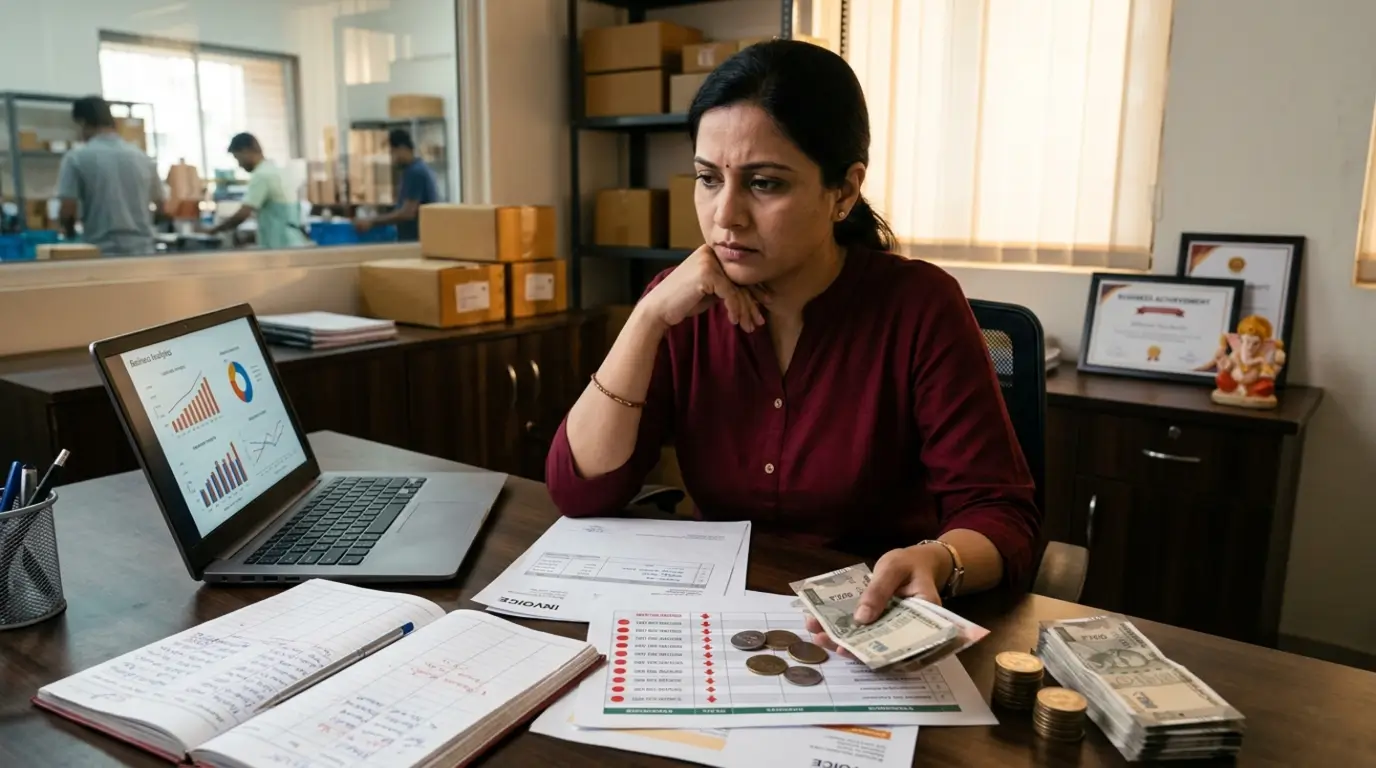
Running a business in India is a dream for many of us. We see the shop shutters go up and the orders pouring in on WhatsApp. It feels like success when the phone pings with payment alerts. But then the end of the month arrives. You look at your bank balance and realize there is nothing left. In fact, you might even be struggling to pay your suppliers or staff. This is a painful reality for many small and medium-sized business owners today. Making sales is easy if you have a good product. Keeping that money is the real challenge.
Many entrepreneurs confuse turnover with profit. They think a busy store or a packed order book means they are winning. But revenue is just a number if your expenses eat everything behind the scenes. In our Indian market, where margins are often thin, and competition is cut-throat this problem is very common. You are working hard, and the customers are happy, but your pocket remains empty. Now, understand the reasons why this happens and how you can fix it.
Table of Contents
The Trap of High Revenue and Low Margins
The first mistake is chasing sales at any cost. In India, we love a good deal. Customers will leave you for a ten-rupee difference. Many business owners drop their prices too low to stay ahead. You might be selling a lot of units but your margin per unit is tiny. If your operational costs rise even by a small bit that tiny margin disappears. You end up working for free or even paying out of your pocket to serve your customers.
Many people do not calculate their landed cost properly. They look at the purchase price of an item and add a small markup. They forget about the hidden costs like transport and storage, or even the electricity used in the warehouse. In our country logistics can be unpredictable. Fuel prices go up, and tolls increase. If you have not built these into your pricing you will lose money on every sale. High revenue becomes a burden because every new order increases your hidden losses.
Understanding Your Real Business Expenses
Most Indian business owners only look at direct costs like raw materials or stock. They ignore the indirect costs that slowly drain the business. These are the small leaks that sink the big ship. Think about the tea for staff or the extra packaging material you give for free. Think about the interest you pay on your business loan or the credit card bills. These are real expenses that need to be tracked daily.
Another big issue is the cost of customer acquisition. In this digital age everyone is running ads on social media. You might be getting many orders from these ads. But have you checked if the profit from one order is more than the cost of the ad? If you spend five hundred rupees on ads to get a customer who only gives you four hundred rupees in profit then you are effectively losing money. This is a common trap for new e-commerce brands in India.
Key Reasons Your Profits are Vanishing
There are several specific areas where Indian businesses lose their hard-earned money without realizing it until it is too late.
- Inventory Management Issues: Keeping too much stock locks up your cash in items that might not sell quickly. This leads to dead stock that eventually gets sold at a loss or expires. On the other hand, having too little stock means you lose customers to competitors. You need a balance where your money is always moving and not sitting on a dusty shelf.
- High Employee Turnover: It is costly and time-consuming to hire and train people in India. Losing a productive staff member due to the loss of an experienced member costs you money in trying to find an experienced replacement. Talent is very difficult to locate as well as retain. With a poor culture in your workplace, you will end up spending more money on recruitment than on expanding your business.
- Uncontrolled Overhead Costs: Small expenses like high rent for a fancy office or unnecessary subscriptions add up fast. Many owners think these things show status, but they actually kill the bottom line. You should always look for ways to optimize your rent and electricity bills. Every rupee saved here goes straight into your pocket as profit.
- Leaking Cash Through Discounts: Offering constant discounts to attract customers can train them to never pay full price. This devalues your brand and kills your margins over time. It is better to provide extra value or better service than to keep cutting prices. Discounting is a race to the bottom where nobody wins except the customer.
- Bad Debt and Credit Cycles: In the Indian market, giving goods on credit is very common but collecting that money is hard. If your money is stuck with clients for months you have to borrow more to keep the business running. The interest on that borrowed money eats your profit. A sale is not a sale until the money is in your bank account.
The Hidden Danger of the Credit Cycle
In textiles or manufacturing, the credit cycle is very long in many Indian industries. You might sell goods today but get paid after ninety days. Meanwhile, you have to pay your suppliers and your staff immediately. This creates a massive cash flow gap. Even if your books show a profit, you might have no cash to buy more raw materials. This is why many profitable businesses go bankrupt in India.
Managing accounts receivable is a full-time job. Many owners are too shy to ask for their money. They fear losing the customer. But a customer who does not pay on time is not a good customer. You are effectively giving them an interest-free loan while you struggle to pay your own bills. You must set clear payment terms and stick to them. If you do not value your cash flow no one else will.
Inaccurate Pricing and Market Pressure
Inflation in India is a reality that affects everything from labor to tea. If you have not increased your prices in two years but your costs have gone up by 20%, you are losing money. Many owners are afraid to raise prices because they fear the competition. But if your competitors are also losing money by keeping prices low they will not last long. You should focus on being the best and not just the cheapest.
Value-based pricing is better than cost-plus pricing. Instead of just adding a percentage to your cost look at the value you provide. If you solve a major problem for your client they will be happy to pay a premium. When you compete on price alone you are always one discount away from failure. When you compete on quality and trust you build a sustainable business that can survive market ups and downs.
Moving From Survival to Sustainability
You need to start looking at your data every single day to fix these problems. Stop relying on guesswork. Use a simple accounting system to track every paisa. Know your break-even point. This is the amount of sales you need just to cover your fixed costs. Anything above this is your actual playground for profit. If you do not know this number you are flying blind.
Focus on your most profitable products or services. Often, 20% of your products give you eighty percent of your profit. Identify those and push them harder. Stop wasting time and energy on low-margin items that cause more headaches than they are worth. It is okay to say no to some customers if they are not profitable for you. A smaller business that makes a clear profit is much better than a huge one that is always in debt.
Conclusion
Running a business is not just about hard work. It is about smart math. Once you master your numbers you will see that you do not need to work more hours. You just need to make sure that every hour you work actually adds value to your bank account. Keep your expenses low and your standards high. This is the only way to build a legacy in the competitive Indian market. Success is not about how much you sell but how much you keep. Focus on your cash flow today and your profit will take care of itself tomorrow.
Read More: Small Business Ideas From Home to Start in India