
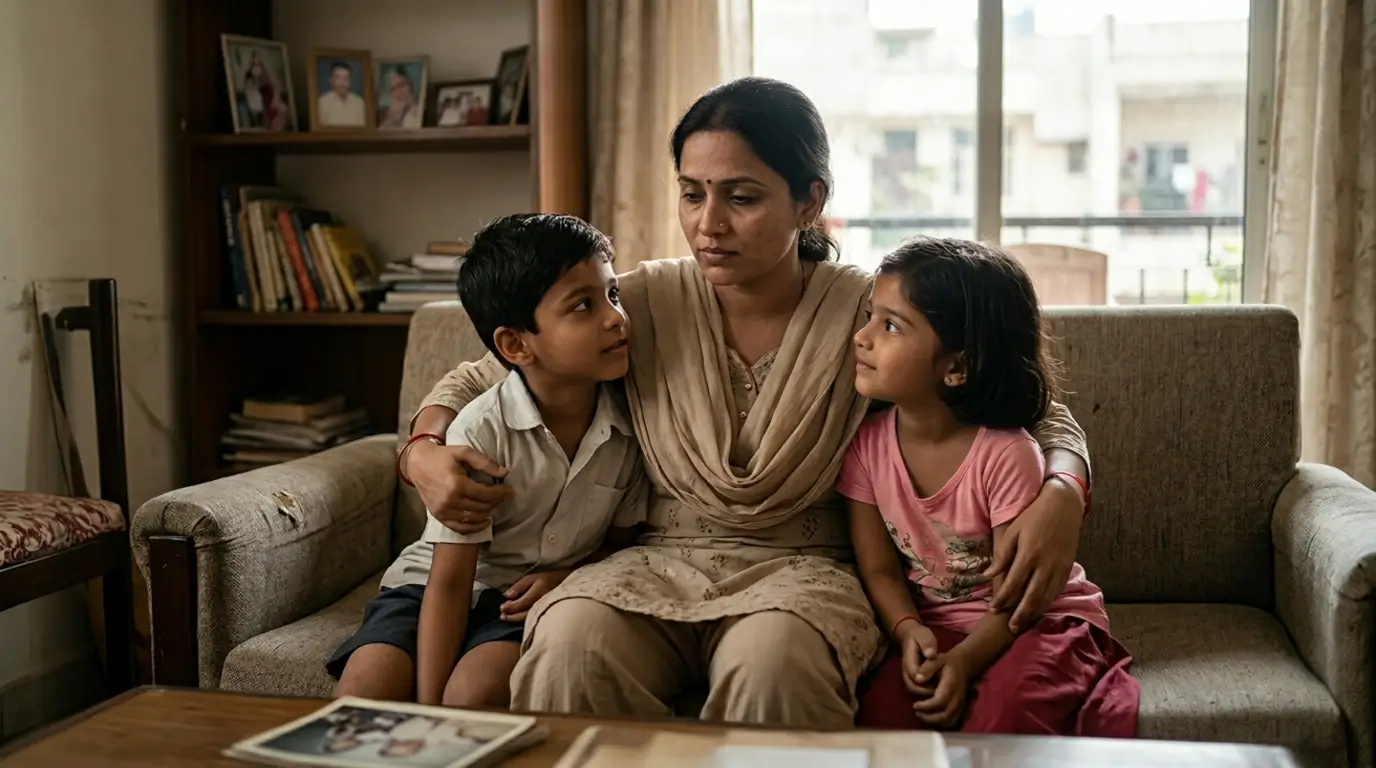
Indians do not like to discuss death. It’s almost a taboo. When a person mentions life insurance during a family dinner, he or she gains a response of either Shubh Shubh bolo (speak auspicious things) or the switching of topics. We exist with a sab theek ho jayega ( everything is alright) mentality. However, having observed the financial situation of Indian families for more than fifteen years, I can say to you that theek ho jayega is not a financial plan.
Life is unpredictable. We arrange weddings, holidays abroad, and even the best schools for our children. But we always forget the single reason that supports all the above plans, and that is our income. When you are the main breadwinner, your family is not only emotionally dependent on you, but they are also economically tied to your monthly salary.
When that paycheck stops permanently, the emotional vacuum is painful enough. However, when there is a financial crisis that comes after, the trauma is doubled. Let’s look at the ground reality of what happens when an Indian middle-class person leaves this world without life insurance.
Table of Contents
Short Run Financial Shaker
The cash flow ceases as soon as a breadwinner dies. Fixed deposits, gold, or property are used to hold savings in most Indian households. It is not always instant to access them. In case you have not sorted out the nomination or even in case your bank accounts are not joint, your spouse may find it difficult to withdraw money to buy everyday groceries or to pay electricity bills.
Most of the immediate costs are in the form of daily expenses; in addition to that, there are the instant costs, such as hospital bills or final rites, that may involve lakhs. Families can compromise by having to borrow money from their relatives without a life insurance payout. It is the beginning of a debt trap that can hardly be realized.
The Burden of Unpaid Debts and EMIs
Our generation is an EMI’s one. Everything is usually bank-funded, including the 2BHK apartment in the gated community and the SUV parked down the stairs. Such loans are easy to achieve in your presence. In your absence, they turn into monsters.
How Different Debts Impact Your Family
| Type of Debt | Impact on Family | Risk Level |
| Home Loan | The bank can seize the house if EMIs are missed. | Very High |
| Car Loan | Immediate repossession of the vehicle. | High |
| Personal Loans | High-interest rates drain remaining savings quickly. | High |
| Credit Card Debt | Legal notices and constant pressure from recovery agents. | Medium |
The responsibility to repay these loans falls squarely on your legal heirs if you die without life insurance. If they cannot pay, the bank has the legal right to auction your home. Imagine your family grieving your loss while simultaneously facing an eviction notice. It is a nightmare no one should ever face.
The Compromise on Children’s Future
The Indian parent hopes to send his child to an excellent-ranked engineering or medical college. Inflation of education in India is almost reaching a point of 10% or 12% every year. A course that is currently costing ₹15 lakhs will definitely cost ₹30 lakhs in ten years.
In the absence of a life insurance corpus and with the primary earner missing, the first to suffer is normally the Education Fund. Your kids may not get to attend their dream college and may only get a local college. They may even be forced to work early to sustain the house, effectively terminating their education ambitions at higher levels. It is not a simple piece of paper, a life insurance policy, but the degree of your child and his or her future career security.
Loss of Social Standing and Dignity With Life Insurance
This is a point people rarely talk about because it feels harsh. In our society, financial independence brings dignity. When a family loses its provider and has no backup, they often become dependent on the “goodwill” of extended family.
Although family members may be helpful, at least in the short run, this assistance usually comes with conditions or eventually subsides. Your husband or wife may be compelled to go back to their parental house or request assistance with their basic needs. This loss of independence can be soul-crushing. Life insurance ensures that your family can continue living in the same house, driving the same car, and maintaining the lifestyle you worked so hard to give them.
Why “Savings” Are Usually Not Enough
The most commonly used answer will be, “I have 10 lakhs in FD and some mutual funds. So far it sounds very well until you count it. Assuming your family costs a monthly expenditure of 50,000 in a month, they require 6 lakhs annually to survive. Even your 10 lakh FD is not going to last two years.
A term insurance plan is specially designed to provide a “Lump Sum” that is usually 10 to 20 times your annual income. This is an amount your savings can rarely match early in your career. It acts as a replacement for your future earnings.
Key Actions to Secure Your Family
If you realize today that you are under-insured or not insured at all, don’t panic. However, do not wait either. The only solution to sleeping peacefully at night is to act.
- Calculate your Human Life Value: This is an easy way of knowing your cover value. Typically, it must amount to at least 10-15 times your annual income and your total outstanding debts.
- Choose Term Insurance: Avoid being confused by complicated “money-back insurance plans” or investment plans. Purchase a plain Term life Insurance. It is the least expensive method to have high coverage. With a tiny monthly premium, you will be able to purchase a cover of 1 Crore or more.
- Check Group Insurance: Group insurance is offered by a number of Indian companies to employees. See whether yours does, but be careful, this cover is terminated when you quit the job. It should also always have a personal policy.
- Inform your spouse about the details: You need not just purchase insurance, but your family should also know where the documents are. Have a Master file of policy numbers, the names of the nominee + contact number of your insurance agent or the contact helpline of the company.
- Check your nominations: Check your life insurance policies and bank accounts, and make sure that they have new nominees. One mistake that is very common in India is that a parent serves as a nominee and fails to change to a spouse after marriage, which may cause legal hassle in the future.
All these steps have the purpose of building a wall surrounding the lifestyle of the family. This is because by calculating out your value, you will not be under-insured, and this is virtually the worst thing to do, as you can be insured. Term plans are very cost-efficient and offer high protection. By telling your spouse about the information, they will not be at the port running mad trying to determine how to collect the money when the time arrives.
Conclusion
Life insurance is not, at the end of the day, about the dead person, but the people who live on. It is a loving and caring thing to do. The safety net is getting thin in the Indian scenario, where the joint family structure is gradually turning into a nuclear family.
You do not desire that your legacy be a mountain of debt and a stream of what-ifs. You do not want your family to remember you by the stress of the unpaid bills. The temptation to take life insurance is possibly the most unselfish monetary choice you are going to make. It makes sure that they have your protection even when you are not there to take their hand.
Do you want me to assist you in knowing how to determine the right life insurance cover that you require, including your present Indian salary and liabilities?
Read More: How to Choose the Right Term Insurance Online for Indian Families
